Saturday, April 16, 2011
If You're Looking for "Cool" or "Pretty" Ninjutsu Martial Arts Training...It Isn't Here!
I don't know about you and your goals. Well, not unless you're one of my personal students with whom I've been working closely with for a while now.
But, when I came to the Ninja's martial arts, I was a police officer. That means that I wasn't looking for fluff, "official" kata, or "soft-training."
I was looking for close combat training and hand-to-hand self-defense techniques that worked. I was also looking for self defense tactics and training that the other martial arts and self defense programs that I had been through just didn't teach.
That being said, I wanted to give you a little more background as to why, how, and some of the reasoning behind my own focus and training. Of course, if you're not looking for real self-defense training, or you're looking for the movie or storybook Ninja - if you want to dress up like a 16th century shadow and take on the mafia single-handedly...
Then, for better or worse...
I can't help you!
You see, unlike many people in the martial arts world, I didn't come to Ninjutsu or Budo-Taijutsu from a sense of love for the martial arts. I didn't set out to become a martial arts teacher or even have one of the "beyond mastery" ranks after 10th degree. Hell, when I first started in this art, I couldn't see beyond Nidan - 2nd degree Black Belt. But, then again...
Ranks meant something very different when I began training in 1980.
So, what was it that brought me to this training? Well, in a word: "Reality!"
Understanding what I mean requires that I share a little bit of who I was before training. It also means that I need to step down off of the pedestal that many have placed me on.
You see, I grew up in a very abusive home (mentally, physically, and emotionally). I was the victim of every bully in school. So, I had the chance to see some of the worst that humanity could be capable of, very early in my life.
Like others in the art, Soke Hatsumi included, it was this need to become strong in the face of danger, and to protect myself from real harm that sent me looking for answers. That, and my exposure to an old television series in the 1960's called, "Kung Fu."
You see, I wasn't attracted to the martial arts, including Ninjutsu, from some sense of becoming a Ninja Turtle, Power Ranger, or another lick-ass Bruce Lee or Chuck Norris wanna-be. I came to this training out of a need for self-protection, but without becoming a fighter. Very different things.
So, starting in Junior High School (we didn't call it "middle" school back then), I discovered the martial arts and joined the karate club. That lead to my search through many different martial arts styles, systems, schools, and teachers... but not feeling "at-home" in any one of them because they just didn't match what I experienced in the "real world."
Then, while stationed with the U.S. Army in South Korea in 1980, and while trying to figure out how to make tae kwon do serve me on the streets as a Military Policeman (without getting nailed for brutality charges for kicking perpetrator's heads in!), I discovered Ninjutsu. And, not only was I impressed with the self-defense and combat aspects of the art (they were presented in a way that dealt with real-world, modern attacks back then), I was also drawn to the composite and dynamic nature of the training - things that went far beyond the scope of conventional martial arts.
But, I didn't stop there.
My years as a street cop, and then eventually as an undercover investigator, private detective and body guard allowed me to go beyond the dojo mentality and really get to experience how these techniques, tactics, and strategies work - against modern attackers, on the street, in the 20th and now 21st century. And, there was even a time where I and a few of my friends spent some time...
...trying to prove this art WRONG!
Instead of being blind believers and followers, we put the art to the test by getting together with other practitioners, by going to other martial arts classes, and by trying to beat the techniques ourselves. And, do you know what we came away with?
We came away with a new-found understanding of the reality and true nature of the training. No illusions. No "pipe-dreams." No super-hero delusions.
That's why you won't see me getting upset because somebody wrote to me to tell me how "bad" my taijutsu is - or that I'm not doing this or that kata "right."
Because I'm not doing this to look like everyone else. I am, and always have been, engaged in this system of self-protection and personal mastery from a realistic perspective that's focused on producing real-world results. And, because it has proven itself to me, not through a politically biased association with certain teachers that I know, like, and trust, but because the lessons that I received from those teachers has proven themselves again and again in the only place that matters -- on the street and in real situations that strip the facade off of those who have other agendas.
Again, I don't know about you, but...
I don't want to look "cool" or "pretty" with my training.
I train the way I do so that my training can "serve" me, and produce the results I need when I'll need it to the most!
Does that sound familiar? Are you learning Ninjutsu and getting the kind of real self-defense tactics and hand-to-hand training that teaches you how to defend yourself with the least amount of wear-and-tear on you?
If so, and you're not already receiving my email newsletters containing self defense tips and strategies for real street training, then now's the time. And, if you do, you can also grab two of my most popular free ebooks on how to protect yourself.
This one is from the purely street fighting self-defense perspective. It's called, Fight Smarter - Not Harder!
And this one discusses the advanced abilities and training as you progress through real ninjutsu training. It's titled, Becoming the Master.
After you download your books and get a chance to see what the best self defense and close combat training programs should be teaching you, perhaps you'll feel driven to go ahead and reserve your place at one of my upcoming ninja camps, and take the next step on the Path of Warrior Mastery!
In Mastery!
Shidoshi Miller
Warrior Concepts Int'l, Inc. / Bujinkan Moki no Tora Dojo
362 Market Street, Sunbury, Pennsylvania 17801 USA
(570) 988-2228


Tuesday, February 08, 2011
The Path of "Greater Sameness"
Do you know why it's getting more and more difficult to find the "best" martial art or self-defense system?
Do you have any idea why, if your attacker has been paying attention and not living under a rock somewhere, that it's getting harder and harder to have the advantage in a fight or self-defense attack situation?
It's because...
Everyone is doing the same thing!
I don't mean that all the martial arts styles and self-defense systems are doing exactly the same thing, but...
When you look at each style or system, you very quickly see that vitually everyone is focused on applying the same skills, against the same targets, and in practically the same way... REGARDLESS of what they're calling what they do.
On top of that, if you take a good, hard look at the way Ninjutsu, Ninpo-taijutsu, or Budo-Taijutsu (whatever you want to call it) is being practiced today, by and large, most teachers and students are doing the exact same thing. Everyone is saying that their art or system is "best," when in fact they are going about things that the teachers and students in the conventional martial arts are doing.
I call this, taking the Path of "Greater-Sameness."
Everyone wants to do the same thing as everyone else... only better.
The problem with this is that, every fighter, attacker, and potential threat to your well-being... has seen your moves before.
He may not have seen your stance or kamae, but he's seen one like it.
He certainly expects you to "block" or counter what he's doing - regardless of whether you call it a "block" or a ken-nagashi, or whatever.
In fact, if he can see what you're doing - at ALL -even a little bit...
whether he's trained or not...
He's NOT going to let you do your cool moves... BECAUSE he can see them coming.
So...
What's the answer?
Well, I can tell you that, for starters, it does not lie in or on the Path of "Greater-Sameness."
In fact, if you're going to be able to survive, you absolutely must think differently.
About fighting.
About conflict.
About Self-defense.
And about "Surviving violence."
You must think about these things from the perspective that no one else is doing. Not other martial artists. Not other self-defense "experts" and practitioners. And not even others studying the same art that you are!
That goes for the everything from the way you punch, kick, and apply a joint lock, to the way you actually think about and assess a violent situation.
My "Inner-Circle" students know this. My in-house, dojo students know this. And those who attend my intensive seminars and yearly Ninja camps know this.
And now it's time for you to know and understand this fundamental truth, if you're going to get out of the same trap that every other student and teacher of martial arts and self-defense are caught in.
Now, if you think that you don't need to know this... that what you're doing is perfect and unbeatable... or if you think I'm "full of it," then I wish you all the "luck" should you ever find yourself in the "thick of things."
But, if this is something that you think you want to explore, to know and understand, to Master...
Then, I have a special treat for you. Because...
I just conducted a free, online training seminar where I taught students how to avoid this trap. This was a special, closed-door, private and personal tele-seminar for serious students only - people who (I hope) are just like you - students and teachers who know that something is wrong with the way things are being done and taught in the self defense and martial arts world...
...and now they know why.
So, what's the treat?
The treat is that, if you're serious about your training, then I'm offering you a complimentary copy of the recording from this class.
All you have to do to claim your free audio training seminar recording is to shoot me an email with the words, "Greater Sameness" in the subject block, and then a short note requesting the recording.
That's it.
In Mastery!
Shidoshi Miller
Do you have any idea why, if your attacker has been paying attention and not living under a rock somewhere, that it's getting harder and harder to have the advantage in a fight or self-defense attack situation?
It's because...
Everyone is doing the same thing!
I don't mean that all the martial arts styles and self-defense systems are doing exactly the same thing, but...
When you look at each style or system, you very quickly see that vitually everyone is focused on applying the same skills, against the same targets, and in practically the same way... REGARDLESS of what they're calling what they do.
On top of that, if you take a good, hard look at the way Ninjutsu, Ninpo-taijutsu, or Budo-Taijutsu (whatever you want to call it) is being practiced today, by and large, most teachers and students are doing the exact same thing. Everyone is saying that their art or system is "best," when in fact they are going about things that the teachers and students in the conventional martial arts are doing.
I call this, taking the Path of "Greater-Sameness."
Everyone wants to do the same thing as everyone else... only better.
The problem with this is that, every fighter, attacker, and potential threat to your well-being... has seen your moves before.
He may not have seen your stance or kamae, but he's seen one like it.
He certainly expects you to "block" or counter what he's doing - regardless of whether you call it a "block" or a ken-nagashi, or whatever.
In fact, if he can see what you're doing - at ALL -even a little bit...
whether he's trained or not...
He's NOT going to let you do your cool moves... BECAUSE he can see them coming.
So...
What's the answer?
Well, I can tell you that, for starters, it does not lie in or on the Path of "Greater-Sameness."
In fact, if you're going to be able to survive, you absolutely must think differently.
About fighting.
About conflict.
About Self-defense.
And about "Surviving violence."
You must think about these things from the perspective that no one else is doing. Not other martial artists. Not other self-defense "experts" and practitioners. And not even others studying the same art that you are!
That goes for the everything from the way you punch, kick, and apply a joint lock, to the way you actually think about and assess a violent situation.
My "Inner-Circle" students know this. My in-house, dojo students know this. And those who attend my intensive seminars and yearly Ninja camps know this.
And now it's time for you to know and understand this fundamental truth, if you're going to get out of the same trap that every other student and teacher of martial arts and self-defense are caught in.
Now, if you think that you don't need to know this... that what you're doing is perfect and unbeatable... or if you think I'm "full of it," then I wish you all the "luck" should you ever find yourself in the "thick of things."
But, if this is something that you think you want to explore, to know and understand, to Master...
Then, I have a special treat for you. Because...
I just conducted a free, online training seminar where I taught students how to avoid this trap. This was a special, closed-door, private and personal tele-seminar for serious students only - people who (I hope) are just like you - students and teachers who know that something is wrong with the way things are being done and taught in the self defense and martial arts world...
...and now they know why.
So, what's the treat?
The treat is that, if you're serious about your training, then I'm offering you a complimentary copy of the recording from this class.
All you have to do to claim your free audio training seminar recording is to shoot me an email with the words, "Greater Sameness" in the subject block, and then a short note requesting the recording.
That's it.
In Mastery!
Shidoshi Miller
Sunday, August 29, 2010
Real Self Defense Training - 5 Insane Self Defense Techniques That Even My Dog Won't Try!
Every day, well meaning individuals just like you and I enroll in self defense and martial arts classes in order to learn real self defense training. The idea is to learn how to not get beaten, broken, or killed by a crazed lunatic who doesn't care that you have a life, dreams, and people who love and depend on you.
And, more often than not, what they end up learning are some of the most insanely stupid techniques that will never work against a serious attacker. After you read this article, you'll know why you must find an expert who has more than a certificate or black belt to teach you how to defend your self. You need someone with real-world experience doing what you want to be able to do!
Here are 5 of the most insanely stupid techniques that I have seen being taught to sincere students every day. Learn them if you want. But, use them at your own risk!
1) Putting your keys between your fingers as weapons! I don't know where this one came from but, all you have to do is try it sometime. First of all, when you're under pressure of attack, you're not going to have the time or coordination to get them where they're supposed to be. And second - you'll find that they just don't work very well in that position.
If you want to use your keys - just hold one like you normally would. It's strong, reliable, and if it's already in your hand - it's VERY destructive!
2) "X-Blocking" a knife stab from overhead! Now here's a technique that has been passed on by martial artists who have absolutely no idea where their art and it's techniques came from. And, while your arms may be very strong in this position, you lack the one thing that ancient warriors had when they did this technique - a helmet to catch and deflect the knife when it comes flying out of his hand! It's a matter of natural physics that says that the shock to his wrist that occurs when his arm slams into yours, will open his hand and inertia will propel the knife right into your head or face!
If someone is coming at you with a knife, get the hell out of the way!
3) Taking up a boxers position with your hands. For this one to work, he has to believe the same thing that you do - that your arms are actually indestructible shields! The smart attacker knows that your arms are flesh and blood just like everything else on you, and will just start pounding on your forearm bones to shut them down. Then, once you've lost the use of your arms, he moves in for the kill!
Your arms are good shields, but they must be positioned so that they are protected as well. If you're going to use your arms for cover, then position them so that the attacker has a much more difficult time trying to damage them!
4) Kicking the head! Yeah, let's do that. In an attempt to kick somebody in the head, we're going to sacrifice our groin, femoral artery, base-leg knee, and balance! Again, here's another case of martial artists being absolutely clueless about where their techniques and skills came from and why they were developed in the first place! The high kicks in Tae kwon do, and other forms of karate, were designed for unarmored fighters to kick someone on horseback! So, unless you've got something between your "mommy-daddy button" and the attacker's weapons - don't use these fancy, "look-at-me-ain't-I-cool" kicks on the street!
If you want to kick the guy in the head, take out his legs first. and then when he's down, kick him anywhere you want!
5) Carrying a gun for self defense with no combat training! This one is only asking for trouble. It's amazing how many people have a tremendously false sense of confidence - cops included - just because they're carrying a firearm. It's stupid. Absolutely insane! And the reason is that THE number one skill that is under-practiced, if it's ever practiced at all, is...
...drawing the weapon under pressure!
If you want to carry a firearm for self defense, make sure that you have the training to draw the weapon, aim without the use of sights, and hit your target every time the weapon fires - and be able to do these things while UNDER PRESSURE - not with your gun in one hand and a beer in the other, while you plink cans and bottles off a tree stump with your buddies!
Self defense is more than just learning cool moves or packing some "heat." It involves a mindset that understands not just what to do if something happens - but also what a real situation is like!
So, the question you have to ask yourself is, do you just want to think and feel like you can protect yourself or do you really want to have the skills that will allow you to protect yourself and others of your choosing when it matters the most?
The truth is that...
Effective self defense requires more than just a few "karate moves." It involves the ability to think strategically, and understand how to defend yourself with as little wear-and-tear on you as possible.
If you really want to know what you MUST know to survive a real street attack, read my newest self defense book: "Fight Smarter - Not Harder!" It's available free at: http://www.warrior-concepts-online.com/street-fighting-self-defense-book.html
Jeffrey M. Miller is an internationally-known self defense expert. Each month he teaches literally thousands of students through live seminars, corporate training events, and his in-demand Self Defense Success Secrets Home Study Courses, the lessons to be able to survive in Today's often dangerous world.
Sunday, June 20, 2010
New Online Ninja Training & Ninjutsu Home Study Course!
Are You Looking For The Secrets To Unlocking The Power of Ninpo-Taijutsu - the Ninja's Self-Protection method?
Advanced
Sanshin no Kata
& Kihon Happo
Video-Based
Ninjutsu Home Study &
Online Ninja Training Course
Are you looking for a solid foundation in the armed and unarmed, self defense methods of the Ninja?
Do you want to become a master of the art of Ninjutsu?
Have you tried learning from books and videos but still couldn't get the full benefit of the lessons?
Are you already a student of the art looking to take your training to the next level?
If so...
Do you think you know the Sanshin no Kata & Kihon Happo, the so-called "basic training models" of Budo and Ninpo-taijutsu?
Think again!
Because, regardless of whether you've been training in this art for years, or you're looking for a place to start - there are correct lessons, strategies, and skills which make up what are known as the "basics" - skills which have absolutely nothing to do with the forms - but make the forms EXACTLY what they are!
Let me ask you something critically important?
Wednesday, December 16, 2009
Why Escaping From a Grabbing Attack Isn't Always The Best Move
by Jeffrey M. Miller
Self defense is a very deep and often complicated subject. Contrary to all of the books, videos, and programs out there that promise to "make you a master in 30 seconds or less," effective and authentic self defense training involves much more than learning a couple of "cool moves." This is not to say that you can not learn some important lessons that will allow you to be successful fairly quickly - it's not going to happen over night. In fact, this article discusses a strategy that you just won't find in the "drive-up window-style" self defense products.
In most self defense and martial arts programs, grab defenses are usually approached from the same perspective. The techniques are generally designed to effect your release from the grab. Regardless of whether you're defending against wrist or clothing grabs, body grabs like "bearhugs," or other restraints, the primary focus is usually on escaping.
This escaping and freeing yourself from the assailant's grip is not a bad idea. In fact, it should be the primary goal for the beginning student who wants to put as much distance between herself and her attacker.
But, as you grow in both ability and comfort level with "being attacked," the advanced training should offer you strategies that allow you more control of the situation, and...
...step outside the attacker's perspective.
One of these strategies is in the way we handle a grabbing attack. Where the beginner and the technique-oriented self defense systems focus on escaping, the advanced student sees that there are several benefits to NOT escaping from your aggressor's hold.
Some of those benefits include:
- 1) The attacker has given up a weapon. When he grabs you, he has tied up one of his weapons and can't use it for anything else without letting go.
2) You know where the grabbing hand is. In a self defense situation, you want to keep track of where his body weapons are at all times. That way, he can't pull a weapon or attack without you knowing it.
3) When you counter attack, he won't let go. This is very difficult to explain in print, or even in a demonstration and should be experienced to be understood. Suffice it to say that, since he "has you," psychologically he is almost conditioned to hold on all the way to the end.
The key to quickly, efficiently, and effectively defending yourself against a street fighter, or any assailant who has experience, is to be able to think outside the box and do things in a way that they have not seen before. This begins with seeing the situation with different eyes than everyone else uses.
| Are you serious about learning real world self defense? Download my new ebook, "Fight Smarter - Not Harder." Jeffrey M. Miller is an internationally-recognized personal protection expert and one of the top 10 self defense instructors on the internet today. Jeff says, "If you really want to be able to defend against and survive a real attack, then I can teach you how to defend yourself against virtually any attacker - guaranteed!" |  |
Monday, November 16, 2009
Self Defense Tips - Street Fighting and Modern Street Self Defense Tips From the Art of Ninjutsu
You don't have to be a Ninja to get some very powerful street self defense tips from the ancient art of Ninjutsu!
It's true. There was a time when I was discouraged with what was being offered as traditional martial arts masquerading as effective systems of self defense for today's world. I saw a huge difference between what we practiced in class and used in the tournament ring, and what was really needed for surviving a street fighting self defense situation.
Do you know what I mean?
But, here's something that I found out. Not all martial arts were created equal. More to the point, most of the conventional systems of martial arts training that we see today, were modified and radically changed from their original combat forms between the mid-1800's up to as late as the 1950's! Fortunately for us, the art of Ninjutsu, a counter-culture to the ruling Samurai, never made the change.
What that means for those of us looking for effective and, more importantly - proven - self defense tips, is that what is being taught today is the same thing that was being used by people who had to save their lives from attacks practically every day. It means that what we're learning and putting to use in our modern street self defense situations worked again and again. And...
Anything that was tried by an ancient warrior that didn't work - we don't know about. Why? Because it died with him!
Here are 3 powerful self defense tips right from the Ninja's art of Ninjutsu that I seriously recommend adding to your self defense skills. They are not step-by-step techniques but rather concepts that will make any technique better, and they will make techniques that are already good - more powerful and effective than you can imagine!
1. Nagare - "Flow": This is the relaxed natural transition of one movement into another without the jerky, start-stop, robotic action of karate-kata. You naturally slip your attacker's attempted punch, grab, or kick, and then, without stopping, respond with a counter attack of your own.
2. Ritsudo - "Rhythm" or "Timing": The ability to move, defend, or attack at just the right moment that makes both your attack a surprise and impossible for your assailant to defend against!
3. Kotsu - "Essence": The technique behind the physical movements. The idea or strategy that we're applying. Instead of "counter-striking his attacking arm," the Ninja sees this as "neutralizing the force of his attack." This way, it's not "how" we're doing what we're doing, but "what" we're doing to him - and "why."
If you're looking for powerful self defense tips that are effective, time-tested, and proven, then I recommend that you explore the world of Ninjutsu and the Ninja's ability to adapt to, and deal with, modern street fighting self defense attacks.
Do you want to know how I do it? You can learn more about defending yourself using the principles of Ninjutsu in this powerful course called, "Foundations of Self-Defense Mastery."
And don't forget to get your free Ninja training dvd: "Ninja Camp 2004". Get your free course and ninja camp dvd and learn how to really protect yourself - Ninja-style! Go to: http://www.warrior-concepts-online.com
Thursday, October 29, 2009
Self Defense Training - 3 Critical Differences Between Martial Arts Training and a Real Attack!
Do you have martial arts experience? Have you taken a self defense training program or two, but know that there is a difference between what you've learned and a real fight?
I understand completely. Because, before I got this area of my life figured out, I was in the exact same place.
When I was a police officer, I and my fellow officers would joke that, when it came to our self-defense training, we were "graduates of Thursday's class at 3 o'clock!" And, police officer or not, we need to know that what we're getting from our self defense training will give us the necessary tools, and maybe more importantly - the confidence - for actually succeeding in a real-life violent attack!
Here's a self defense tip that I used to get what I needed: I looked at what I was learning and compared that with what I actually experienced in a self defense situation against real attackers. Then, and here's what you have to do as well...
I found teachers that could give me what I needed to survive!
But, how do you know if the self defense training you're getting is right?
Here are several differences between conventional martial arts training and most so-called self defense programs. If the self defense training that you're getting overly focuses on these elements... run!
1. Pre-staged training. Technique training is important, but if everything you're doing involves step-by-step, memorized strings of moves with no allowance for variations or drills for creative response and decision-making under pressure, then you are not developing the critical skills you'll need to survive! If you aren't learning to apply the skills your getting in a chaotic, free-response, and stressful way, then what you're doing is really not self defense training!
2. Coddling. While your self defense training should be relatively safe, your instructor should not be coddling you and telling you how great you are. He should also not have to deal with whining, complaining, or other nonsense about you're not wanting to do certain skills for whatever reason. You either want to be able to defend yourself against a brutal attacker who doesn't care about you, or you want to look good and show off!
3. Emotionally-sterile. One of the most important missing elements from most martial arts and self defense training courses is emotion. The reality is that, a self defense situation is a highly-charged - highly emotional experience. It is one of the most emotional situations you could ever find yourself in.
And yet, the majority of time in most training is spent on step-by-step training and theory - not learning how to operate under certain types of psycho-emotional stress - each type limiting your body in very specific ways!
If you really want to survive a real-life attack, then you must find a self defense training program that will give you the tools you will need! You must learn things you never wanted to know, do things most people don't want to have to do, and experience things that will scare you, unnerve you, and make you feel uncomfortable!
But then, you know what your other choice is, right? And he's waiting out there for you!
Is your self defense training giving you the security, skills, and confidence to survive? If you're serious about getting the techniques, tactics and strategies that work, then I want to help you.
Do you want to know how I do it? You can learn more about defending yourself with this strategy and others in this powerful course called, "Foundations of Self-Defense Mastery."
Get this Self Defense Training Course!
This powerful course outlines 6 phases of an effective self defense strategy and training outline that I recommend if you really want to be able to defend yourself against real-world, brutal attackers who want to beat, break or kill you. And the best part is that it's free when you subscribe to my online self defense training newsletter.
And don't forget to get your free self defense DVD: "Danger Prevention Tactics: Protecting Yourself Like A Pro". Click here to get your free self defense training course and self defense DVD and learn how to really protect yourself! http://www.warrior-concepts-online.com
Wednesday, October 28, 2009
Know How to Defend Yourself Against a Bigger Attacker? 1 Secret Makes it Easier to Defend Yourself!
Do you want to able to defend yourself against a bigger, stronger attacker?
I know how you feel. I have always been short and, even though I have been involved in the martial arts and self defense since my teen years, when I became a police officer I found it nearly impossible to use what I learned in conventional martial arts against bigger attackers - let alone guys my own size!
I'm sure you can imagine just how confused and frustrated I was. All that time, effort, and training - for what? So I fully understand your own uncertainty at being able to defend yourself in a real self-defense street fight.
But, I have a secret for you... and here it is:
I learned what it takes to protect myself against a violent attacker who was bigger and stronger than me, and you can learn to defend yourself too!
Get this, almost 90% of attacks can be handled with basic skills because most attackers are opportunists. That means that if you make it difficult for them, they will go look for an easier target!
So, this is excellent news for you and I - especially since we want to know how to defend yourself quickly, easily and, more importantly, effectively! And, we can use this fact to our advantage.
I want you to think about a time when someone startled you or you were nervous or scared of something. Your body didn't charge in or stand still like an emotionless robot did it?
Typically, martial arts and self defense training classes that you could take to learn how to defend yourself take up this static positioning from which to defend. And I understand why. It's easy to learn the moves this way. But your body just doesn't work this way in a real-world, violent attack - especially when you're trying to defend yourself against someone bigger than you.
So instead, let's use this secret strategy from the martial art of ninjutsu - Japan's ancient Ninja - to defend yourself!
What is this secret? It's this:
Strategic Distancing
And, all strategic distancing is, is using proper distancing to control the attacker's ability to get at you while you're defending yourself. You can do this is by...
- 1. Being too far away so the assailant has to make up the distance before his attacks will land, or...
- 2. Getting in too close so that he doesn't have the room he needs to do what he's good at.
Warning: Do not neglect the above strategies! Be sure to take this critical, life-saving skill seriously and add it to your self defense training if you're serious about being able to defend yourself against a violent attacker who's larger than you.
Can you defend yourself against larger, stronger attackers? If you want to learn how to do this effectively then I want to help you. Do you want to know how I do it? You can learn more about defending yourself with this strategy and others in this powerful course called, "Foundations of Self-Defense Mastery."
This powerful course outlines 6 phases of an effective self defense strategy and training outline that I recommend if you really want to be able to defend yourself against real-world, brutal attackers who want to beat, break or kill you. And the best part is that it's free when you subscribe to my online newsletter.
And don't forget to get your free self defense dvd: "Danger Prevention Tactics: Protecting Yourself Like A Pro". Click here to get your free course and self defense dvd and learn how to really protect yourself! http://www.warrior-concepts-online.com
Sunday, October 18, 2009
Reality-Based Self-Defense: A Two-Fold Approach For Successful Personal Defense
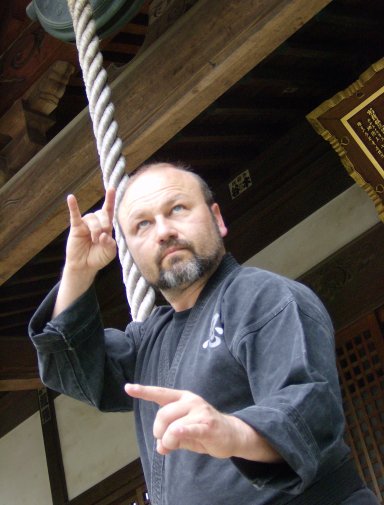
by Jeffrey M. Miller
Director
Warrior Concepts Int'l, Inc
Many people, including karate and so-called self-defense teachers really aren't sure where to begin when it comes to mastering the ability for protecting yourself against a real-world violent attacker. This article takes a look at the two-fold approach that I suggest for clients who are serious about getting through a street attack.
To explore the common approach to martial arts and self-defense instruction, the typical approach appears to be to simply get a few of tricks and techniques, earn some cool-looking belt or maybe a certificate of some kind, and presto, you're set. Right?
If that's true, then why are so many trained individuals becoming victims to real attackers? Why, if this stuff works in the dojo or self-defense class, are their infalible skills failing miserably on the street, when dealing with real-world attacks thrown by serious, real-world assailant?
There are lots of possibilities but I think the primary one is that, for the most part, these classes are simply a case of the blind leading the blind. What that means is that individuals, who have no experience with dealing with violence, are attempting get something from self-defense instructors who, themselves, are lacking street experience at overcoming and winning real world attack situations.
So, what do you need to survive a real self-defense situation?
My own view on the whole self-defense learning curve, and what I teach my clients, is two fold.
Initially, be trained in as many options as possible so that you can react in different situations and against a variety of assailants.
Also, in the moment, when an attack is happening, the defender must be able to respond to and manage the violence itself - no matter where it comes from or what's behind it.
Like a double-edged sword, each side is critical if the practitioner is to be truly successful. The first part, your class training should arm you with not just tested skills, but an understanding of the critical principles and concepts that are being taught by the classroom models. In this way, you won't have to rely the taught techniques themselves, but you will be able to operate during the attack, not against a stylized attack but, against the actual assault your attacker is throwing at you. Several of these foundational ideas include:
- 1) Shielding
2) Strategic angling and positioning
3) Timing and responsiveness
4) Proper distance
5) and others
The second is associated with attitude, or "heart." Regardless of how sure you are, or feel in class with your friends, peers, and junior students, what matters in a real self-defense situation is how you respond and deal with the pure, animalistic violence being thrown at you by a serious, angry, and violent human being who isn't pulling their punches and couldn't care less about your safety at all. Will you focus or freeze? The only thing that will matter is what no one else but you will do when that moment is on you.
Reminds me of the plane ride I found myself on to the tiny island of Grenada when I was in the Army several years ago. While I sat there, looking at the other side of the plane and reviewing what I would do when I was actually in a deadly combat zone (assuming we didn't get blown out of the sky first), I heard other guys farther back in the aircraft actually crying. Ironically, these were the same super-troopers who, during practice field exercises where we practiced our combat skills, ran around playing John Wayne and Steven Seagal, acting tough and telling everyone that they were ready to go to war right then and there. Well, here we were - heading for the real thing - and they were the least-prepared to deal with the intense reality of the situation.
Your training must make sure that you can deal with both his punches, kicks, cuts,or whatever the attack may be, and you must be able commit yourself to winning by dealing with the rage and raw brutality that is a natural part of combat. Two sides to the same coin. Both necessary for success.
So, examine what you've trusted up till now, and insure that you do so with the eyes of a critic, not a blind believer. See what's in the news. Ask some law enforcement or security professionals, bouncers, or even military personnel who have seen combat what you can expect to experience inside a actual self-defense situation with someone who wants to beat, break, or kill you. Then, all assumptions aside, begin to learn what you'll need to fill in the gaps to make sure that you'll come out on top, and not end up face down on the sidewalk!
Do you want to learn the attitudes, skills, and knowledge to master this part of your life? I have just completed my brand new online e-course to self-defense mastery, "Foundations of Self-Defense Mastery"
Download it free here: Self Defense Course
What if you could learn in hours, instead of months or years, more than the typical martial arts or self-protection student without all of the ritual, robotic kata, or military-like atmosphere? How? By mastering this simple, proven program for self defense success: www.warrior-concepts-online.com
Reserve your place now in my upcoming EDR Self-Defense Intensive Training Weekend - Nov. 14th - 15th, 2009. Here's the link to get all the details:
http://www.warrior-concepts-online.com/edr-self-defense-intensive.html
Jeffrey Miller coaches private students, organizations, and martial arts teachers how to not die or fall victim in a brutal attack situation. Mr. Miller says "If you really want to learn what you must know to be a self-defense expert, I can teach you how to master the skills necessary to successfully protect yourself against any attacker, guaranteed"
Wednesday, March 04, 2009
Self-Defense Within Martial Arts Training
Demands a Real-World Perspective
This story is being offered in response to a request made by my teacher, Soke (Grand Master) Masaaki Hatsumi, during a recent training visit to Japan. During one of the training sessions, Soke was suggesting that everyone, regardless of rank, should make it a point to talk to those with actual combat experience and to learn from these people. The point was, if you do not know what a real fight is like, you will not be able to train properly for an authentic situation.
I was asked to share some of my experience in dealing with an attack and the following story came to mind. Though I have much experience with dealing with danger and dangerous people, this particular situation stands out as both a successful outcome where I was able to use some of my ninpo-taijutsu martial arts training, and a learning experience where I was actually able to control both my awareness and response, instead of mentally shutting down and "hoping" for the best.
***
The incident occurred many years ago while I was stationed in, what was then, West Germany. I was serving with the United States Army Military Police Corps. My partner and I were called to respond to a unit where a serviceman was assaulting others, including the officer-in-charge.
When we arrived at, what we thought was, the location of the incident, there was no one but the Charge of Quarters present. He had no idea about the incident. What none of us knew was that the 'problem' was occurring next door and moving in our direction.
While my partner and I were confirming the call with our superiors, the attacker entered the building where we were. He was obviously intoxicated and shouting racial insults and demanding satisfaction before he started a 'real war.' By the smell of him, he had been drinking heavily and primarily whiskey. His clothes showed signs of a struggle and at this point I wasn't sure if I was facing an attacker or the victim of an assault.
I immediately tried to calm the individual and find out what the problem was. As I was doing this, several other soldiers, including the command duty officer entered the building and became involved. The belligerent soldier was going on with his racial attacks and how he was attacked by what he thought were his friends. It was then that he turned his attention to me and began implying that he had martial arts experience and "didn't have to prove himself to anyone."
During this, and later after interviewing witnesses, we found that the individual had tested for his black belt in another martial art earlier that day and was out 'celebrating' with his friends. Witnesses testified that the more intoxicated he became, the more he started "showing off" to his friends which involved hitting and kicking. Eventually, his friends had had enough and then attempted to stop his obnoxious behavior by pushing him away and leaving him behind. This only made him more "playful" at which time he jumped on his friends resulting in them throwing him down on the ground. It was this that finally enraged him enough to chase them to the barracks and begin attacking others.
As he was telling me that he didn't have to prove himself, he also made statements that I only thought that I was tougher than him because I carried a gun, a nightstick and wore an MP helmet. I responded by removing my helmet and handing my night stick to my partner in an attempt to neutralize any perceived threat that I might be projecting and bring the soldier's anxiety level down. I informed him that the gun stayed where it was but that we needed to talk like civilized men so we could solve whatever problem was going on.
The soldier continued on with the "I'm a black belt and don't need to prove how tough I am" speech when he closed the distance and, from about an inch from my face, stated that, "I'm going to show you how tough you're not."
I ordered the soldier back and before I knew what was happening, I sensed his fist coming up between our bodies toward my jaw. I rode off the strike which landed before I could evade and then backed out as he began to flail widely with both arms at my head and body. I remember taking up a hoko-like position (a guarding posture in ninjutsu designed to create a protective 'bubble' that is difficult for the attacker to get through) to cover against the incoming attacks and having to simultaneously deal with an officer who thought that I was the one doing the attacking!
At one point, I realized that his right arm had wrapped around my left forearm and that a 'musha-dori-like thing' (uplifting elbow - shoulder dislocating technique) was happening. I remember moving to capture his balance and laid him down when suddenly his feet went out from under him. Later I found out that, in an attempt to help, my partner chose that moment to sweep my assailant's legs out from under him. I felt the soldier's shoulder give way as I applied the lock and took him down. This didn't help with the anxiety and emotional pressure I was dealing with as I was now worried about a possible 'police brutality' charge for excessive force.
This injury didn't deter his aggression though as he continued to fight against our restraint. We were finally able to subdue him and get him onto his stomach to be handcuffed when his wife and young child entered the building. I don't know how they found out about the situation but there they were. I felt sad for them and was only able to give a look of apology for having to do this. Again, more stress was added in that I didn't want to have to physically hurt this man in front of his family.
Unfortunately, their presence only served to escalate the problem. When the soldier became aware of his wife and child, he blamed my partner and I for his "embarrassment" and began to fight against his restraint again. I am not a big man and this soldier's build was easily 150% of my own size and weight, so holding him was a serious problem. Having to improvise and immobilize the man, I placed my night stick between the handcuff chain and his back and applied leverage against his spine which created a situation where he would only hurt himself with his continued resistance. This was only necessary for a moment or two, as he passes out from his exertion.
*************
As I related during my initial telling of the story at the Hombu Dojo ('main training hall'0 in Noda-city, Japan, my legs begin to shake and I can feel my breathing change as I recall this situation and many others like it. It does not control me or the way I go through my life in the ordinary sense that I am not afraid to associate with people or the like. What it has done is imprinted on me much more than just a step-by-step memory of the events, and I'm sure that my recollection of these is less than accurate because the experience was much more emotional and from what Soke has called "budo-nerves" orientation or perspective than from any sort of memorized technique string.
I will simply end this by saying that, this situation is one that has forever changed my perspective on how I should train, and as a teacher, how I should train my students. It has taught me that kata-like, step-by-step training is only a piece of the training puzzle but, anyone who believes that they will fight this way is deluding themselves. Conversely, it has also taught me that training that is just henka-based, where the basics like cover, distance and the like are not drilled until they become second-nature and the student just "does whatever" in an attempt to imitate (his or her teacher) is also deluded. This type of practice is necessary but, again, only a piece.
I am in complete agreement with Soke when he points out that it is the ability to go between the animal instinct response required for surviving an attack and returning to the civilized state to live a happy life, unstained by fear, defensiveness or antisocial behavior because of the attack that should be the goal.
Let me also say that, I respect Soke and the Shihan master instructors that I train with. But, not simply because they are Soke and the Shihan. I respect these people and continue to train in this art precisely because my own experience with having to handle danger tells me that what they have to offer is authentic and "on the mark" with that experience. Because I know that should I ever be attacked again, it will be the lessons that I have learned from them and not my admiration of them or their abilities that will help to insure that my family gets to have me around a little while longer. In a world filled with martial artists and instructors who want trophies, admiration and to 'look good,' it is comforting to know that there are still those who have what the true warrior needs to create a life worth living and the power to protect that life from whatever might harm it.
Jeffrey M. Miller is the founder and master instructor of Warrior Concepts International. A senior teacher in the Japanese warrior art of Ninjutsu - "the art of the Ninja," he specializes in teaching these ancient, proven, and time-tested self-protection and personal development secrets in a way that transforms his students into modern-day Ninja warrior masters themselves.
Want to master the science of self-defense? Get your copy of my free e-book, "Fight Smarter - Not Harder" by going to http://www.warrior-concepts-online.com
For additional information about how Jeffrey Miller or Warrior Concepts can help you transform yourself with the secrets of the ancient Ninja Warriors, go to the Home page or call WCI at 570-988-2228
This article is copyright (C)2005, 2009 by Jeffrey M. Miller and Warrior Concepts International, Inc. It is free to use in it's original form, with no alterations or additions. If it to be used online, all links must be active and without the use of "no-follow" type coding which would prevent the reader from accessing the resources being referenced.
Get more free articles in Shidoshi Miller's Article Archive!
I was asked to share some of my experience in dealing with an attack and the following story came to mind. Though I have much experience with dealing with danger and dangerous people, this particular situation stands out as both a successful outcome where I was able to use some of my ninpo-taijutsu martial arts training, and a learning experience where I was actually able to control both my awareness and response, instead of mentally shutting down and "hoping" for the best.
***
The incident occurred many years ago while I was stationed in, what was then, West Germany. I was serving with the United States Army Military Police Corps. My partner and I were called to respond to a unit where a serviceman was assaulting others, including the officer-in-charge.
When we arrived at, what we thought was, the location of the incident, there was no one but the Charge of Quarters present. He had no idea about the incident. What none of us knew was that the 'problem' was occurring next door and moving in our direction.
While my partner and I were confirming the call with our superiors, the attacker entered the building where we were. He was obviously intoxicated and shouting racial insults and demanding satisfaction before he started a 'real war.' By the smell of him, he had been drinking heavily and primarily whiskey. His clothes showed signs of a struggle and at this point I wasn't sure if I was facing an attacker or the victim of an assault.
I immediately tried to calm the individual and find out what the problem was. As I was doing this, several other soldiers, including the command duty officer entered the building and became involved. The belligerent soldier was going on with his racial attacks and how he was attacked by what he thought were his friends. It was then that he turned his attention to me and began implying that he had martial arts experience and "didn't have to prove himself to anyone."
During this, and later after interviewing witnesses, we found that the individual had tested for his black belt in another martial art earlier that day and was out 'celebrating' with his friends. Witnesses testified that the more intoxicated he became, the more he started "showing off" to his friends which involved hitting and kicking. Eventually, his friends had had enough and then attempted to stop his obnoxious behavior by pushing him away and leaving him behind. This only made him more "playful" at which time he jumped on his friends resulting in them throwing him down on the ground. It was this that finally enraged him enough to chase them to the barracks and begin attacking others.
As he was telling me that he didn't have to prove himself, he also made statements that I only thought that I was tougher than him because I carried a gun, a nightstick and wore an MP helmet. I responded by removing my helmet and handing my night stick to my partner in an attempt to neutralize any perceived threat that I might be projecting and bring the soldier's anxiety level down. I informed him that the gun stayed where it was but that we needed to talk like civilized men so we could solve whatever problem was going on.
The soldier continued on with the "I'm a black belt and don't need to prove how tough I am" speech when he closed the distance and, from about an inch from my face, stated that, "I'm going to show you how tough you're not."
I ordered the soldier back and before I knew what was happening, I sensed his fist coming up between our bodies toward my jaw. I rode off the strike which landed before I could evade and then backed out as he began to flail widely with both arms at my head and body. I remember taking up a hoko-like position (a guarding posture in ninjutsu designed to create a protective 'bubble' that is difficult for the attacker to get through) to cover against the incoming attacks and having to simultaneously deal with an officer who thought that I was the one doing the attacking!
At one point, I realized that his right arm had wrapped around my left forearm and that a 'musha-dori-like thing' (uplifting elbow - shoulder dislocating technique) was happening. I remember moving to capture his balance and laid him down when suddenly his feet went out from under him. Later I found out that, in an attempt to help, my partner chose that moment to sweep my assailant's legs out from under him. I felt the soldier's shoulder give way as I applied the lock and took him down. This didn't help with the anxiety and emotional pressure I was dealing with as I was now worried about a possible 'police brutality' charge for excessive force.
This injury didn't deter his aggression though as he continued to fight against our restraint. We were finally able to subdue him and get him onto his stomach to be handcuffed when his wife and young child entered the building. I don't know how they found out about the situation but there they were. I felt sad for them and was only able to give a look of apology for having to do this. Again, more stress was added in that I didn't want to have to physically hurt this man in front of his family.
Unfortunately, their presence only served to escalate the problem. When the soldier became aware of his wife and child, he blamed my partner and I for his "embarrassment" and began to fight against his restraint again. I am not a big man and this soldier's build was easily 150% of my own size and weight, so holding him was a serious problem. Having to improvise and immobilize the man, I placed my night stick between the handcuff chain and his back and applied leverage against his spine which created a situation where he would only hurt himself with his continued resistance. This was only necessary for a moment or two, as he passes out from his exertion.
*************
As I related during my initial telling of the story at the Hombu Dojo ('main training hall'0 in Noda-city, Japan, my legs begin to shake and I can feel my breathing change as I recall this situation and many others like it. It does not control me or the way I go through my life in the ordinary sense that I am not afraid to associate with people or the like. What it has done is imprinted on me much more than just a step-by-step memory of the events, and I'm sure that my recollection of these is less than accurate because the experience was much more emotional and from what Soke has called "budo-nerves" orientation or perspective than from any sort of memorized technique string.
I will simply end this by saying that, this situation is one that has forever changed my perspective on how I should train, and as a teacher, how I should train my students. It has taught me that kata-like, step-by-step training is only a piece of the training puzzle but, anyone who believes that they will fight this way is deluding themselves. Conversely, it has also taught me that training that is just henka-based, where the basics like cover, distance and the like are not drilled until they become second-nature and the student just "does whatever" in an attempt to imitate (his or her teacher) is also deluded. This type of practice is necessary but, again, only a piece.
I am in complete agreement with Soke when he points out that it is the ability to go between the animal instinct response required for surviving an attack and returning to the civilized state to live a happy life, unstained by fear, defensiveness or antisocial behavior because of the attack that should be the goal.
Let me also say that, I respect Soke and the Shihan master instructors that I train with. But, not simply because they are Soke and the Shihan. I respect these people and continue to train in this art precisely because my own experience with having to handle danger tells me that what they have to offer is authentic and "on the mark" with that experience. Because I know that should I ever be attacked again, it will be the lessons that I have learned from them and not my admiration of them or their abilities that will help to insure that my family gets to have me around a little while longer. In a world filled with martial artists and instructors who want trophies, admiration and to 'look good,' it is comforting to know that there are still those who have what the true warrior needs to create a life worth living and the power to protect that life from whatever might harm it.
Jeffrey M. Miller is the founder and master instructor of Warrior Concepts International. A senior teacher in the Japanese warrior art of Ninjutsu - "the art of the Ninja," he specializes in teaching these ancient, proven, and time-tested self-protection and personal development secrets in a way that transforms his students into modern-day Ninja warrior masters themselves.
Want to master the science of self-defense? Get your copy of my free e-book, "Fight Smarter - Not Harder" by going to http://www.warrior-concepts-online.com
For additional information about how Jeffrey Miller or Warrior Concepts can help you transform yourself with the secrets of the ancient Ninja Warriors, go to the Home page or call WCI at 570-988-2228
This article is copyright (C)2005, 2009 by Jeffrey M. Miller and Warrior Concepts International, Inc. It is free to use in it's original form, with no alterations or additions. If it to be used online, all links must be active and without the use of "no-follow" type coding which would prevent the reader from accessing the resources being referenced.
Get more free articles in Shidoshi Miller's Article Archive!
Thursday, January 22, 2009
Self-Defense: Your Body's Own Natural Self Protection Modes
Contrary to common belief, the human body has a set of default, hardwired defense modes that can be used in your defense against a real-world attacker. Here, I'll briefly describe these modes and how you can use them to win against a dangerous attacker.
If you look at most martial arts and self-defense programs, you can easily come to the belief that all you have to do is learn a few moves or techniques, train until you can execute them well, and...well, that's it. You're a master or self-defense expert.
However, there is one aspect that's generally missing from most self defense training. And that is the addition of your body's emotions as tools for defense.
In the past few years, systems and programs have been developed that focus on what's known as "adrenal response training." These programs, however, tend to concentrate on only one of these emotional states, or modes.
There are actually four of these modes that we can find ourselves in when confronted with danger. Each state is a natural response to several factors including things like your:
And others
Each of these modes is more than a mood, state, or condition which we might find ourselves in. They also control, in many ways, how we process information, and even work to free or hinder certain types of body movement.
The Four Emotion-based Defensive Modes Are:
As I said, each of these modes is both a reaction to the current situation, and a strategy for handling a situation in a very specific way. As a general outline, I'll quickly explain each mode from both a responsive and a controlling perspective.
Please note that the following modes are in no particular order of importance, nor is one better than any of the others. But you may find that a particular mode or two feel more comfortable or "natural" for you, each should be seen as an option that can be pressed into service in a self-defense situation. And, as I've said time and again, the more options you have in any given situation, the greater your chances of getting the results you want.
Stable/Confident "Earth" Mode.
This defense mode is marked by a general sense of relaxed calm. You really don't perceive a threat and you are in firm control of the encounter. Notice that I didn't say that you were stubborn and forced a sense of command. In what I call the "earth-mode," you use superior positioning and relaxed strength to stop his attacks and direct your strong points against his weak ones, using leverage and crushing pressure to put an end to his plan to hurt you.
Adaptive/Defensive "Water" Mode.
Just like the water, you adapt to his movements. You use long-range, defensive angling to pull away from his attacks and then crash back in with powerful strikes and kicks to his vulnerable weak points. This mode is often present when you feel intimidated by his size, strength, or other factors. You instinctivelly want to create time and distance between you and your opponent so that he has to work harder to get at you.
Direct/Aggressive "Fire" Mode.
Either out of fear, anger, or a need to react first, you move in and direct the fight to the bad guy. In this "fire" mode, you are almost pulled in by a sense of urgency and a need to get things over with quickly. When I say "aggressive," I do not necessarily mean destructive, but rather a direct, committed, "go-for-it" attitude which sends you directly in to meet the assailant before he can really get started. Again, this mode could be triggered by anger just as easily as it could be initiated out of a feeling of being cornered and needing to take action right away.
Slippery/Evasive "Wind" Mode.
This mode is marked by a very carefree, open movement with a sense of last-second timing to slip, avoid, and wrap up your opponent with his own attacks. The body position associated with this mode is very open and looks very different when compared against the conventional martial arts and self-defense stances that you usually see. This mode could be caused by a complete desire to avoid the situation altogether. It could also be used in a playful, confusing manner as you effortlessly evade your attacker's punches, kicks, and grabs only to catch him with your own attacks from unseen and confusing directions.
Like I said, there is no one best mode. Each is a natural response that is hardwired inside us and a part of our overall natural human self-protection mechanisms.
While each of us has steered toward one or another of these modes as we've moved through our lives, and perceive our chosen one as the "only natural" for us. The truth is that, with proper training, each mode can be developed, enhanced, and added back into our arsenal as a very powerful strategic option for dealing with a real-world self-defense situation with a very real-world attacker.
Are you a private individual, law enforcement or security professional, member of the military, or corporate manager looking for real-world self-defense training that works?
Get the information you need to survive a real world self-defense situation.
Get 3 self-defense bonus reports when you get the Complete Self-Defense Training Library
Jeffrey Miller is an internationally recognized self-defense expert. He is the creator of the unique EDR: Non-Martial Arts Defensive Training System and teaches individuals, security professionals, companies, and organizations how to survive danger in Today's often unsafe world. Go to his web site at => www.warrior-concepts-online.com
If you look at most martial arts and self-defense programs, you can easily come to the belief that all you have to do is learn a few moves or techniques, train until you can execute them well, and...well, that's it. You're a master or self-defense expert.
However, there is one aspect that's generally missing from most self defense training. And that is the addition of your body's emotions as tools for defense.
In the past few years, systems and programs have been developed that focus on what's known as "adrenal response training." These programs, however, tend to concentrate on only one of these emotional states, or modes.
There are actually four of these modes that we can find ourselves in when confronted with danger. Each state is a natural response to several factors including things like your:
- 1. Perception of danger or level of threat
- 2. Personality type
- 3. Rules and restrictions that you're aware of as a part of your job
- 2. Personality type
And others
Each of these modes is more than a mood, state, or condition which we might find ourselves in. They also control, in many ways, how we process information, and even work to free or hinder certain types of body movement.
The Four Emotion-based Defensive Modes Are:
- Stable/Confident
- Adaptable/Defensive
- Direct/Aggressive
- Slippery/Evasive
As I said, each of these modes is both a reaction to the current situation, and a strategy for handling a situation in a very specific way. As a general outline, I'll quickly explain each mode from both a responsive and a controlling perspective.
Please note that the following modes are in no particular order of importance, nor is one better than any of the others. But you may find that a particular mode or two feel more comfortable or "natural" for you, each should be seen as an option that can be pressed into service in a self-defense situation. And, as I've said time and again, the more options you have in any given situation, the greater your chances of getting the results you want.
Stable/Confident "Earth" Mode.
This defense mode is marked by a general sense of relaxed calm. You really don't perceive a threat and you are in firm control of the encounter. Notice that I didn't say that you were stubborn and forced a sense of command. In what I call the "earth-mode," you use superior positioning and relaxed strength to stop his attacks and direct your strong points against his weak ones, using leverage and crushing pressure to put an end to his plan to hurt you.
Adaptive/Defensive "Water" Mode.
Just like the water, you adapt to his movements. You use long-range, defensive angling to pull away from his attacks and then crash back in with powerful strikes and kicks to his vulnerable weak points. This mode is often present when you feel intimidated by his size, strength, or other factors. You instinctivelly want to create time and distance between you and your opponent so that he has to work harder to get at you.
Direct/Aggressive "Fire" Mode.
Either out of fear, anger, or a need to react first, you move in and direct the fight to the bad guy. In this "fire" mode, you are almost pulled in by a sense of urgency and a need to get things over with quickly. When I say "aggressive," I do not necessarily mean destructive, but rather a direct, committed, "go-for-it" attitude which sends you directly in to meet the assailant before he can really get started. Again, this mode could be triggered by anger just as easily as it could be initiated out of a feeling of being cornered and needing to take action right away.
Slippery/Evasive "Wind" Mode.
This mode is marked by a very carefree, open movement with a sense of last-second timing to slip, avoid, and wrap up your opponent with his own attacks. The body position associated with this mode is very open and looks very different when compared against the conventional martial arts and self-defense stances that you usually see. This mode could be caused by a complete desire to avoid the situation altogether. It could also be used in a playful, confusing manner as you effortlessly evade your attacker's punches, kicks, and grabs only to catch him with your own attacks from unseen and confusing directions.
Like I said, there is no one best mode. Each is a natural response that is hardwired inside us and a part of our overall natural human self-protection mechanisms.
While each of us has steered toward one or another of these modes as we've moved through our lives, and perceive our chosen one as the "only natural" for us. The truth is that, with proper training, each mode can be developed, enhanced, and added back into our arsenal as a very powerful strategic option for dealing with a real-world self-defense situation with a very real-world attacker.
Are you a private individual, law enforcement or security professional, member of the military, or corporate manager looking for real-world self-defense training that works?
Get the information you need to survive a real world self-defense situation.
Get 3 self-defense bonus reports when you get the Complete Self-Defense Training Library
Jeffrey Miller is an internationally recognized self-defense expert. He is the creator of the unique EDR: Non-Martial Arts Defensive Training System and teaches individuals, security professionals, companies, and organizations how to survive danger in Today's often unsafe world. Go to his web site at => www.warrior-concepts-online.com
Wednesday, January 21, 2009
Martial Arts: Are You Learning To Get Your Arms Battered In A Real-World Fight Or Self-Defense Situation?
When it comes to defending targets against an opponent's attacks, especially punching attacks, a martial art student focusing on real-world\effective self-defense must be careful that you're not overlooking one. While this particular target may be virtually invisible to most attackers, not to mention martial arts students and instructors, facing a skilled attacker who knows how to exploit this weakness can have you on the losing end with a broken arm, if not more, when everything is said and doneit's all over.
What is this target?
And how can the bad guy get to this target and you end up with a broken arm, or close to it, as a bare minimum?
Before I answer that question, here's one for you.
Have you ever seen a boxer's stance? Have you ever watched boxers move around during a match?
I'm sure you have.
Now, where are their arms?
Up. Right?
And they do it for cover - to protect their heads and faces from being pummeled by their opponent's fists, right?
Of course.
One more question.
Have you ever seen pictures or film footage of one of the old-style fighters? You know, like Joe Lewis, or even those before his time? Have you ever seen how boxers stood back then, or positioned their arms...before boxing gloves were used?
If you haven't, you really should do some research so you can understand what I'm talking about. Especially if you're serious about being able to survive against an assailant who's serious about beating, breaking, or even killing you.
To get to the point, I'll tell you a little about the old school, bare-knuckle fighters. Even those who used gloves, didn't have the kind of padding that we do today. So, they held their arms and fists in very different positions than today's fighters.
Why?
Because they knew that holding your arms up and out in front of your attacker's fists, would get them beaten. They also knew that if their arms were hit while in this position, that they also stood the chance of punching themselves in the face with their own knuckles!
What does this have to do with you learning self-defense. Simple. Because many teachers are teaching their students to fight or defend themselves with their arms in this modern boxer position.
"So," you might be saying, "what's the problem?"
The problem is that not understanding why something is done, or why it's effective in one context, can lead you to think that it works all the time. And, especially in the realm of self defense and not-dying at the hands of some crazy maniac, this is certainly true.
The reason that modern boxers can hold their arms the way they do is precisely because of their gloves. Sport martial artists fighting in competitions can get away with this also. It's because the opponent's knuckles are covered with padding that protects your arms. So, these fighters never go for the arms as a target. They know that it's pointless.
But, without the gloves, the knuckles can deal a lot of damage to the narrow bones of your forearm. Something that's just not an issue in in a sport fight.
The point here is that, if you're studying martial arts to win trophies or to get belts, do whatever style you want and all the luck to you. However, if you're trying to develop the ability to protect yourself against a brutal assailant who will do anything to brutalize you, there are certain mistakes you can't afford to make.
So, regardless of what you've been taught, avoid holding your arms vertically or at least turned with the broad back of the forearm out and use distance to keep the bad guy from going after your arms. After all, it's going to be very difficult to throw your own punches with arms that have been beaten or even broken because you put them out there for him to beat on.
Are you a private individual, law enforcement or security professional, member of the military, or corporate manager looking for real-world self-defense training that works?
Get the knowledge you need to effectively handle a real world self-defense situation.
Get three self-defense reports when you get my Self-Defense Super Library
Jeffrey Miller is an internationally known self-defense expert. He is the creator of the powerful EDR: Non-Martial Arts Defensive Training System and teaches individuals, security professionals, companies, and organizations how to be more safe in Today's often unsafe world. Go to his web site at => www.warrior-concepts-online.com
What is this target?
And how can the bad guy get to this target and you end up with a broken arm, or close to it, as a bare minimum?
Before I answer that question, here's one for you.
Have you ever seen a boxer's stance? Have you ever watched boxers move around during a match?
I'm sure you have.
Now, where are their arms?
Up. Right?
And they do it for cover - to protect their heads and faces from being pummeled by their opponent's fists, right?
Of course.
One more question.
Have you ever seen pictures or film footage of one of the old-style fighters? You know, like Joe Lewis, or even those before his time? Have you ever seen how boxers stood back then, or positioned their arms...before boxing gloves were used?
If you haven't, you really should do some research so you can understand what I'm talking about. Especially if you're serious about being able to survive against an assailant who's serious about beating, breaking, or even killing you.
To get to the point, I'll tell you a little about the old school, bare-knuckle fighters. Even those who used gloves, didn't have the kind of padding that we do today. So, they held their arms and fists in very different positions than today's fighters.
Why?
Because they knew that holding your arms up and out in front of your attacker's fists, would get them beaten. They also knew that if their arms were hit while in this position, that they also stood the chance of punching themselves in the face with their own knuckles!
What does this have to do with you learning self-defense. Simple. Because many teachers are teaching their students to fight or defend themselves with their arms in this modern boxer position.
"So," you might be saying, "what's the problem?"
The problem is that not understanding why something is done, or why it's effective in one context, can lead you to think that it works all the time. And, especially in the realm of self defense and not-dying at the hands of some crazy maniac, this is certainly true.
The reason that modern boxers can hold their arms the way they do is precisely because of their gloves. Sport martial artists fighting in competitions can get away with this also. It's because the opponent's knuckles are covered with padding that protects your arms. So, these fighters never go for the arms as a target. They know that it's pointless.
But, without the gloves, the knuckles can deal a lot of damage to the narrow bones of your forearm. Something that's just not an issue in in a sport fight.
The point here is that, if you're studying martial arts to win trophies or to get belts, do whatever style you want and all the luck to you. However, if you're trying to develop the ability to protect yourself against a brutal assailant who will do anything to brutalize you, there are certain mistakes you can't afford to make.
So, regardless of what you've been taught, avoid holding your arms vertically or at least turned with the broad back of the forearm out and use distance to keep the bad guy from going after your arms. After all, it's going to be very difficult to throw your own punches with arms that have been beaten or even broken because you put them out there for him to beat on.
Are you a private individual, law enforcement or security professional, member of the military, or corporate manager looking for real-world self-defense training that works?
Get the knowledge you need to effectively handle a real world self-defense situation.
Get three self-defense reports when you get my Self-Defense Super Library
Jeffrey Miller is an internationally known self-defense expert. He is the creator of the powerful EDR: Non-Martial Arts Defensive Training System and teaches individuals, security professionals, companies, and organizations how to be more safe in Today's often unsafe world. Go to his web site at => www.warrior-concepts-online.com
Sunday, August 17, 2008
The Unseen Value of Martial Arts Training - A Lesson From Ben Franklin
During one of my recent trips to Japan for training with Bujinkan Grandmaster, Masaaki Hatsumi, one of the themes he touched upon in class was in the value of our training. And, how much like a good investment, the longer we participated, the more value we received.
Ironically, most students who come in to the academy, as with most things in their life, are looking for "quick results." Or, more to the point, a "quick fix." They say they're looking for self-defense and the ability to protect themselves from the ever-growing threat of danger in our world. But, what they're really looking for is a greater feeling of confidence. And, once they start to feel like they can handle themselves, which is usually after learning a couple of techniques well...
...they quit!
Soke ("head-of-lineage") Hatsumi, my teacher and the grand master of the Bujinkan Dojo, reminded us that...
..."there is a huge difference between "feeling" like you can handle yourself, and the ability to actually do it."
He said that most students are not willing to put enough time, effort, or energy to really understand what it feels like to live a life where, not only are they able to deal with danger should it happen to them, but that they don't have to worry about attackers appearing at all!
It's amazing, but true. As I have climbed the ladder in both rank and skill, there is one thing that I've noticed above all else. And that is...
...the greater my skill, the less I've had to use it for self-protection!
As a 12th degree Black Belt, I can't tell you how long it's been since I've had to deal with the threat of someone wanting to do me harm. And this is not limited to a physical assault, but extends into every area of my life.
I can hear many ask, "Why bother training at all, if you never have to use your skills for self-defense anyway?"
"Why bother at all? Why not just take your chances?"
While these questions sound logical, they are asked from the viewpoint of convenience. And, as we all know, what sounds good in theory, is often the furthest thing from reality.
The reason we train is twofold:
First, we train to realize that ideal life where we won't have to worry about danger because, even if it did occur, we knew we could handle it. And,...
Second, we're not there yet and may need to protect ourselves along the way to attaining our goal!
Benjamin Franklin, one of the acknowledged Founding Fathers of this great nation, once said, "They that are on their guard and appear ready to receive their adversaries, are in much less danger of being attacked than the supine, secure and negligent."
The truth is, the longer we train and the better we develop our skills, the safer we will be. This is true both of our self-defense techniques as well as our personal development skills.
In fact, I believe that it is precisely those traits and qualities that the martial arts have helped me to nurture, grow, and develop - traits like confidence, discipline, respect, commitment, and a host of others - that actually act as my shield against most attackers. It is these more than any physical skill that communicates to others that I am a confident, powerful person in control of his world, that determines who will want to connect with me, and for what reason.
Why learn the often-violent methods associated with the martial arts then, if all I had to do was to develop those inner qualities that keep me safe? Again, same reason as I mentioned before...
...until I do, I am at-risk from those forces that would seek to harm me.
Ironic, isn't it?
We come to self-defense training to be ready and able to protect ourselves from harm and, at the same time, are preparing ourselves for a day when few would ever want to. Because it is precisely our ability to handle ourselves, that creates the end result. Not the other way around.
Be careful. Only looking at the obvious parts of training will cause you to miss the big picture and the unseen value that it holds for you, and the rest of your Life!
Get more free articles like this one at www.warrior-concepts-online.com/articles.html
Also...
You can now subscribe to my new podcast radio show called "KUDEN". You can read more about it and the upcoming web-based seminars that I'll be offering by scrolling down a bit to the prior post with that information. Please note that, due to technical difficulties, the release dates had to be changed from what's listed in the original announcement. I just recorded the first show and it goes live on Wednesday, August 20th, 2008!
Other no-cost training resources:
Are you subscribed to my self-defense and ninja training newsletter? If not, you probably haven't received the free gift that you get when you subscribe. What is it?
It's a 7-part ecourse called, Foundations of Self-Defense Mastery" and it's my gift to you for becoming a member of WCI's growing group of online students and teachers. At this point, we have over 6,000 members and growing!
The newsletter itself is a fantastic way to keep informed and add to your knowledge and training database about topics like learning self-defense, online ninja training, women's self-defense, and even tips for parents on child safety. Add to that, this free course and the other books, videos, and live training programs offered through WCI, and you've got a one-stop place for all your self-defense, martial arts, and Ninja Training needs!
Alright. Enough of telling you why you're crazy if you haven't subscribed. Here's the link to get the newsletter and the free ecourse: Learn Self-Defense!
Until next time.
Peace, Happiness, and Success!
Shidoshi Miller
Ironically, most students who come in to the academy, as with most things in their life, are looking for "quick results." Or, more to the point, a "quick fix." They say they're looking for self-defense and the ability to protect themselves from the ever-growing threat of danger in our world. But, what they're really looking for is a greater feeling of confidence. And, once they start to feel like they can handle themselves, which is usually after learning a couple of techniques well...
...they quit!
Soke ("head-of-lineage") Hatsumi, my teacher and the grand master of the Bujinkan Dojo, reminded us that...
..."there is a huge difference between "feeling" like you can handle yourself, and the ability to actually do it."
He said that most students are not willing to put enough time, effort, or energy to really understand what it feels like to live a life where, not only are they able to deal with danger should it happen to them, but that they don't have to worry about attackers appearing at all!
It's amazing, but true. As I have climbed the ladder in both rank and skill, there is one thing that I've noticed above all else. And that is...
...the greater my skill, the less I've had to use it for self-protection!
As a 12th degree Black Belt, I can't tell you how long it's been since I've had to deal with the threat of someone wanting to do me harm. And this is not limited to a physical assault, but extends into every area of my life.
I can hear many ask, "Why bother training at all, if you never have to use your skills for self-defense anyway?"
"Why bother at all? Why not just take your chances?"
While these questions sound logical, they are asked from the viewpoint of convenience. And, as we all know, what sounds good in theory, is often the furthest thing from reality.
The reason we train is twofold:
First, we train to realize that ideal life where we won't have to worry about danger because, even if it did occur, we knew we could handle it. And,...
Second, we're not there yet and may need to protect ourselves along the way to attaining our goal!
Benjamin Franklin, one of the acknowledged Founding Fathers of this great nation, once said, "They that are on their guard and appear ready to receive their adversaries, are in much less danger of being attacked than the supine, secure and negligent."
The truth is, the longer we train and the better we develop our skills, the safer we will be. This is true both of our self-defense techniques as well as our personal development skills.
In fact, I believe that it is precisely those traits and qualities that the martial arts have helped me to nurture, grow, and develop - traits like confidence, discipline, respect, commitment, and a host of others - that actually act as my shield against most attackers. It is these more than any physical skill that communicates to others that I am a confident, powerful person in control of his world, that determines who will want to connect with me, and for what reason.
Why learn the often-violent methods associated with the martial arts then, if all I had to do was to develop those inner qualities that keep me safe? Again, same reason as I mentioned before...
...until I do, I am at-risk from those forces that would seek to harm me.
Ironic, isn't it?
We come to self-defense training to be ready and able to protect ourselves from harm and, at the same time, are preparing ourselves for a day when few would ever want to. Because it is precisely our ability to handle ourselves, that creates the end result. Not the other way around.
Be careful. Only looking at the obvious parts of training will cause you to miss the big picture and the unseen value that it holds for you, and the rest of your Life!
Get more free articles like this one at www.warrior-concepts-online.com/articles.html
Also...
You can now subscribe to my new podcast radio show called "KUDEN". You can read more about it and the upcoming web-based seminars that I'll be offering by scrolling down a bit to the prior post with that information. Please note that, due to technical difficulties, the release dates had to be changed from what's listed in the original announcement. I just recorded the first show and it goes live on Wednesday, August 20th, 2008!
Other no-cost training resources:
Are you subscribed to my self-defense and ninja training newsletter? If not, you probably haven't received the free gift that you get when you subscribe. What is it?
It's a 7-part ecourse called, Foundations of Self-Defense Mastery" and it's my gift to you for becoming a member of WCI's growing group of online students and teachers. At this point, we have over 6,000 members and growing!
The newsletter itself is a fantastic way to keep informed and add to your knowledge and training database about topics like learning self-defense, online ninja training, women's self-defense, and even tips for parents on child safety. Add to that, this free course and the other books, videos, and live training programs offered through WCI, and you've got a one-stop place for all your self-defense, martial arts, and Ninja Training needs!
Alright. Enough of telling you why you're crazy if you haven't subscribed. Here's the link to get the newsletter and the free ecourse: Learn Self-Defense!
Until next time.
Peace, Happiness, and Success!
Shidoshi Miller
Monday, August 04, 2008
3 Keys To Effective Self-Defense
By Jeffrey M. Miller
(C) 2008 Warrior Concepts Int'l, Inc.
When you think about a self-defense situation, what are the top three considerations for being effective? Is it having strength, stamina, power, or a ton of way-cool, tricky, martial arts techniques?
While all of those things help to one extent or another, none of them really touches on the priorities that will help you to prevail in a life or death struggle. Don't get me wrong. It certainly helps to be the bigger, faster, stronger, or more skilled combatant. But these things are only helpful if you're in a situation where they will serve you.
Let me explain it a different way.
Strength only matters if you are in a position or can grab your assailant in a way that allows you the use of your strength. And as for power...
... power is derived from size and motion. If an assailant jumps you and pins you to a wall or the floor, you will find it difficult to generate any sort of power as we normally think of it.
Stamina only matters if you're in a fight that's going to last minutes instead of seconds. Typically, karate and boxing tournaments have two minute rounds or bouts. That's an eternity in a life-and-death, self-defense situation where the goal is to get things over and done with in...
...less than 10 SECONDS!
As for knowing a lot of techniques, what can I say? Information is power, right?
But, what if you're new to this whole idea of self-defense? What if you just started taking classes or learning how to get away from a dangerous attacker? Or...
...what if, no matter how many techniques you know...
...your attacker is a better, more skilled, more experienced fighter?
Then what?
I've written extensively about what I call, "The 6 Phases of an Effective Self-Defense Strategy." This is designed to lead my students through just that, the phases that a self-defense situation can go through, and how to make sure that we have sufficient training to be able to operate effectively in each phase, or stage, of an attack.
Admittedly though, the 6 phases are the ideal - the best case we can hope for. They all function as they should when you have warning from your assailant and you can see things coming.
Often though, attacks happen with little or no warning at all. So, how do we trim even more off the top and come up with the minimum elements necessary to be able to come out of a situation with as little wear-and-tear as possible?
The key here is to focus on the situation that we're talking about. In the "6 Phases" formula, we can see the attack, or potential for danger, coming. So, we attempt things like...
Escaping to Safety,
Confusing the attacker, and...
Dissuading, or convincing him find another victim
This is just a quick outline for our discussion here. If you aren't familiar with the "6 Phases For Effective Self-Defense," you can learn about them in "The Karate-Myth." It's a great resource for understanding the "science of self-defense" and how to make protecting yourself as easy as possible. And, of course, it's loaded with some really great and easy-to-learn techniques for stopping an attacker and putting him where he belongs... on the GROUND! Click the link to read more about "The Karate-Myth" and the valuable bonus reports that go with it.
When the attack comes with little-to-no warning. When it comes at us quickly and ferociously and we don't have the time for escape, let alone trying to distract or talk our assailant down, we need just the basic-basics.
So, the 3 Keys - the unbreakable elements of an effective self-defense strategy are...
Sounds simple, I know. But that's what training and a good teacher is for - to help you to do the tough things like controlling your fear, focusing under pressure, and teaching you the most effective ways to hit certain targets.
Remember, you can have whatever theories you want in life. You can have your favorite style, teacher, techniques, or whatever. But, when the rubber-meets-the-road, so-to-speak, and you're face-to-face with your worst nightmare...
...you must pay attention, stay focused, and do what works!
This article is copyright (C)2008 by Jeffrey M. Miller and Warrior Concepts International, Inc. It is free to use in it's original form, with no alterations or additions. If it to be used online, all links must be active and without the use of "no-follow" type coding which would prevent the reader from accessing the resources being referenced.
For additional information about how Jeffrey Miller or Warrior Concepts can help you create the life you've always dreamed of living and how to protect that life from anything that would harm it, go to the Home page or call WCI at 570-988-2228
(C) 2008 Warrior Concepts Int'l, Inc.
When you think about a self-defense situation, what are the top three considerations for being effective? Is it having strength, stamina, power, or a ton of way-cool, tricky, martial arts techniques?
While all of those things help to one extent or another, none of them really touches on the priorities that will help you to prevail in a life or death struggle. Don't get me wrong. It certainly helps to be the bigger, faster, stronger, or more skilled combatant. But these things are only helpful if you're in a situation where they will serve you.
Let me explain it a different way.
Strength only matters if you are in a position or can grab your assailant in a way that allows you the use of your strength. And as for power...
... power is derived from size and motion. If an assailant jumps you and pins you to a wall or the floor, you will find it difficult to generate any sort of power as we normally think of it.
Stamina only matters if you're in a fight that's going to last minutes instead of seconds. Typically, karate and boxing tournaments have two minute rounds or bouts. That's an eternity in a life-and-death, self-defense situation where the goal is to get things over and done with in...
...less than 10 SECONDS!
As for knowing a lot of techniques, what can I say? Information is power, right?
But, what if you're new to this whole idea of self-defense? What if you just started taking classes or learning how to get away from a dangerous attacker? Or...
...what if, no matter how many techniques you know...
...your attacker is a better, more skilled, more experienced fighter?
Then what?
A Simple Formula
I've written extensively about what I call, "The 6 Phases of an Effective Self-Defense Strategy." This is designed to lead my students through just that, the phases that a self-defense situation can go through, and how to make sure that we have sufficient training to be able to operate effectively in each phase, or stage, of an attack.
Admittedly though, the 6 phases are the ideal - the best case we can hope for. They all function as they should when you have warning from your assailant and you can see things coming.
Often though, attacks happen with little or no warning at all. So, how do we trim even more off the top and come up with the minimum elements necessary to be able to come out of a situation with as little wear-and-tear as possible?
The key here is to focus on the situation that we're talking about. In the "6 Phases" formula, we can see the attack, or potential for danger, coming. So, we attempt things like...
Escaping to Safety,
Confusing the attacker, and...
Dissuading, or convincing him find another victim
This is just a quick outline for our discussion here. If you aren't familiar with the "6 Phases For Effective Self-Defense," you can learn about them in "The Karate-Myth." It's a great resource for understanding the "science of self-defense" and how to make protecting yourself as easy as possible. And, of course, it's loaded with some really great and easy-to-learn techniques for stopping an attacker and putting him where he belongs... on the GROUND! Click the link to read more about "The Karate-Myth" and the valuable bonus reports that go with it.
Just the Basics
When the attack comes with little-to-no warning. When it comes at us quickly and ferociously and we don't have the time for escape, let alone trying to distract or talk our assailant down, we need just the basic-basics.
So, the 3 Keys - the unbreakable elements of an effective self-defense strategy are...
- 1) Situational Awareness - Pay attention to what's going on around you. Actively look at people, instead of avoiding contact as is the case in most social situations.
- 2) Stay Focused - You could also call this step "Controlling Your Fear." If you notice someone or something that could be a threat - perhaps someone who looks angry or suspicious, keep your eye on them. You don't have to stare-and-glare, but you should be aware of them and what they're doing. I talk about this concept quite a bit in my video, "Danger Prevention Tactics: Protecting Yourself Like a Pro".
This also extends to the actual attack. Stay as calm as possible so that you can watch what's happening. For many people, their reaction is to close their eyes and "hope for the best." I didn't say this was easy, just what you MUST do to be successful.
And finally...- 3) React Immediately and Decisively -
As soon as the attack happens, start your defense. Don't try to figure out who this person is or why they're attacking you. You must immediately do three things if you stand a chance at winning. You must...- A) Neutralize the effects of what they're doing. Cover your targets or ride-off the blows that are landing.
- B) Keep your head. Stay focused on what you can do and as soon as you have an opportunity...
- C) Take whatever targets open up. If he leaves his throat open and your can hit it - hit it! If you can kick his groin, kick his groin. Whatever presents itself, take THAT thing! And keep taking targets until he's down and out or help arrives.
Sounds simple, I know. But that's what training and a good teacher is for - to help you to do the tough things like controlling your fear, focusing under pressure, and teaching you the most effective ways to hit certain targets.
Remember, you can have whatever theories you want in life. You can have your favorite style, teacher, techniques, or whatever. But, when the rubber-meets-the-road, so-to-speak, and you're face-to-face with your worst nightmare...
...you must pay attention, stay focused, and do what works!
This article is copyright (C)2008 by Jeffrey M. Miller and Warrior Concepts International, Inc. It is free to use in it's original form, with no alterations or additions. If it to be used online, all links must be active and without the use of "no-follow" type coding which would prevent the reader from accessing the resources being referenced.
For additional information about how Jeffrey Miller or Warrior Concepts can help you create the life you've always dreamed of living and how to protect that life from anything that would harm it, go to the Home page or call WCI at 570-988-2228
Get more free articles in Shidoshi Miller's Article Archive!
Monday, July 21, 2008
Get Self-Defense Training & Learn Ninjutsu Online
Podcasts & Webinars
Just a quick note to let everyone know that I'm in the process of upgrading the ways that my students, clients, and friends can get information from me about self-protection and personal development training.
In addition to the free newsletters that you can subscribe to at:
http://www.warrior-concepts-online.com/newsletter.html
I am teaming up with two of my Black Belt students to produce a podcast radio show (called "Kuden") and a series of online seminars, also known as "webinars" on self-defense and Ninjutsu, the Japanese martial art of the Ninja. Future plans also include adding programs for my personal development, Mikkyo, and Corporate Workplace Violence clients.
Right now, the planned schedule will be:
Newsletters - 2 to 3x week
Podcasts - 1 per week
Webinars - at least 1 major one per month (with the possibility of a few smaller freebies)
The newsletter is of-course FREE.
And, when you subscribe, or go to the website at http://www.warrior-concepts-online.com you can sign-up for free online training courses that are delivered via email.
I'll have a page up soon about the podcasts (also "free"), including a very professional "opener" that you can download and listen to, to get an idea about the quality and "feel" of the shows.
Thanks again for your trust and support.
Peace & Happiness,
Shidoshi Jeffrey M. Miller
Just a quick note to let everyone know that I'm in the process of upgrading the ways that my students, clients, and friends can get information from me about self-protection and personal development training.
In addition to the free newsletters that you can subscribe to at:
http://www.warrior-concepts-online.com/newsletter.html
I am teaming up with two of my Black Belt students to produce a podcast radio show (called "Kuden") and a series of online seminars, also known as "webinars" on self-defense and Ninjutsu, the Japanese martial art of the Ninja. Future plans also include adding programs for my personal development, Mikkyo, and Corporate Workplace Violence clients.
Right now, the planned schedule will be:
Newsletters - 2 to 3x week
Podcasts - 1 per week
Webinars - at least 1 major one per month (with the possibility of a few smaller freebies)
The newsletter is of-course FREE.
And, when you subscribe, or go to the website at http://www.warrior-concepts-online.com you can sign-up for free online training courses that are delivered via email.
I'll have a page up soon about the podcasts (also "free"), including a very professional "opener" that you can download and listen to, to get an idea about the quality and "feel" of the shows.
Thanks again for your trust and support.
Peace & Happiness,
Shidoshi Jeffrey M. Miller
Tuesday, July 01, 2008
"3 Lessons of the Ninja's Kamae", and more...
by Shidoshi Jeffrey M. Miller
In the Ninja's art of unarmed combat known as ninpo-taijutsu, or budo-taijutsu, there is the core lesson of kamae - the use of effective body positioning. While other martial arts might refer to this strategic positioning of the body as dachi or "stances," the Ninja sees his or her kamae as an outward manifestation of the inner workings of his or her heart, rather than a fixed position dictated by one's style.
Progress through any educational endeavor is often seen as merely learning the lessons that the teacher gives us. Nothing more. Nothing less.
Rarely does a student question the relevance of any given skill or its relationship to other skills and lessons being taught at the same time. And this is no different in the martial art world.
This is especially true when it comes to the skills commonly referred to as "the basics."
In fact, it's these "basics" that often go overlooked by students and teachers alike as being anything more than merely base elements of a particular style. In fact, they're often seen as nothing more than...
...the stuff to learn so we can move onto "the cool stuff."
I know that I, myself, used to believe that. That is, until I went from conventional, sport-oriented, martial arts, to the art of ninjutsu.
Of course, in the beginning of my training, kamae were just that...kamae. I really didn't see them as any different from the "stances" of my earlier training in karate, tae-kwon-do, and other arts. Even though my teacher spoke of "taking up" the kamae and repeating the "idea" of kamae as meaning "mind-body-spirit attitudes" - being the physical manifestations by our bodies of how we felt and what we thought we could do in any given moment.
It wasn't until I had years of training under my belt, so-to-speak, and found myself hitting a wall in my progress and growth that I finally decided to take another look at the obvious - at these things called kamae.
I began by looking at all of the positions that I had been taught. Each had a name and came from a particular lineage, or school of combat that had been passed down to my teacher.
I pulled out my notes and reread passages in books by my teacher and others who had written about the Ninja's art of ninjutsu, or ninpo, as it's known in its higher, life-centered, order.
But, it wasn't until I took a step back from my role as a student trying to get rank - trying to learn the next kata or "fight-example" - that everything started to become clear. It wasn't until I switched my brain from "learning" to "experience" mode that things started to make sense.
************************************************
You can't beat experience when it comes to something as vitally important as self-protection. In my book "The Karate-Myth" and the bonus materials that come with it, I share over 30 years of study, research, and practical experience garnered from my experience as a police officer, undercover investigator, and body guard. Get more info about the Karate-Myth here
************************************************
When I looked at my experience as a police officer and body guard and the lessons that I had picked up in "the school of hard-knocks" I suddenly realized that, regardless of form...
...regardless of whether a kamae came from the Gyokko-ryu, Kukishinden-ryu, or Koto school, they all were teaching the same lessons.
And then something else hit me.
Even the basics, the things we think of as obvious lessons, are themselves teaching us lessons.
I realized that buried within each lesson - within each skill - whether it be rolling, walking, cutting, shooting, or kamae...
...were lessons that were universal in nature and yet invisible unless you either knew what to look for or had a teacher with real-life experience who could help you to see them for what they are.
It was then that I realized that each and every kamae was teaching the same lessons. Some of these lessons were at deeper levels and required more understanding, but there were three that stood out for the beginner.
These three basic lessons of kamae are:
Stability/Balance - the ability to properly position and align the parts of your body for maximum effectiveness and minimum effort, and...
Attitude - the ability to communicate your intention to your opponent with your body
Once I uncovered these three jewels, everything changed in my training. I was no longer trapped by the ignorant eyes of the beginner who, years before saw what he thought his teacher was doing. I was then able to correct my kamae and take up positions that had strength, power, and the ability to control an attacker's perceptions, decisions, and actions, without even touching him.
Are you trying to learn as much as you can about the lineages that make up the Bujinkan Dojo?
Learn to fight smarter - not harder!
Check out the Takagi-Yoshin Ryu Shoden no Maki DVD
Well, here it is... June. A full 9 months since my accident and I'm think I'm finally getting over the hump of things. I've been referred to anesthesiologists for what is known as "pain therapy." What that means is... they've decided to focus on the neuro-muscular issues that I've been telling them about. These doctors have put me on a stronger regimen of muscle relaxers, steroids, and neuro-adjusters (whatever they are). They gave me two weeks to improve before they consider a shot directly into the damaged area of my back, which they say they have to do under X-ray.
At this point, I don't think the shot will be necessary. The current medications seem to be working (except for the almost constant daze and fog I'm under with them). I've been slowly increasing my time on the floor with students, and adding to the skill sets to see what I still can and cannot do without causing more injury to myself.
I want to thank everyone who has been there for me and those of you who have been checking in on a regular basis. I also want to apologize to those of you who have called to leave messages or have sent emails that I just didn't get back to. It has been a rough road, but improvement, as always, is ongoing.
There have been many projects either on hold or moving alng very slowly due to my accident. We were working on the first of dozens of new books, special reports, videos, and training programs back in September of 2007.
As my health has been improving, I've been able to refocus on a few of the projects nearest to completion.
Here's a list of a few of the new books and videos that I'll be releasing in the next few weeks:
Surviving Under Fire!" 3-DVD Set
This training course on DVD is a compilation of 3 seminars that I taught covering the "4 Pillars of Handgun Defense." Each DVD covers a specific aspect or pillar.
Disc 1 covers the introduction to the subject of self-defense using the handgun. Topics also include: Neutralizing recoil, aiming, instinctive shooting, combat distance, drawing, and more.
Disc 2 covers the principles, concepts, and strategies of effectively disarming an assailant with a handgun.
Disc 3 covers the mirror opposite of Disc 2 - retention. This DVD teaches the lessons necessary for holding onto your weapon when an assailant is trying to forcefully take it from you.
Ninja Hiden Juroppo-ken
This book will focus on the "16 Secret Fists of the Ninja." Each fist or body weapon is not only described and shown but you'll also learn the correct way to make the fist, the best targets for each fist, and the lineages and alternate names for each.
The Absolutely Unbreakable Laws of Self-Defense
This book focuses on what matters most - principles and ideas that work. These are the rules to live (or not) by. Instead of focusing on techniques and strategies, this book outlines the reason behind every good technique.
In preparation for the release of these new training resources, I've decided to bundle many of my current books and special reports with the popular Danger Prevention Tactics DVD, into a Complete Self-Defense Package. You can still purchase the items separately but I've made it easy to have the whole set for over 50% off the regular price.
And, if you order before the price goes back up, I'll even throw in a Kubotan self-defense keychain, 2 special reports, and the shipping for the keychain and DVD for fr*ee.
For more information or to order the Self-Defense Bundle, use this link: Self-Defense Package
Until next time,
Shidoshi Miller
In the Ninja's art of unarmed combat known as ninpo-taijutsu, or budo-taijutsu, there is the core lesson of kamae - the use of effective body positioning. While other martial arts might refer to this strategic positioning of the body as dachi or "stances," the Ninja sees his or her kamae as an outward manifestation of the inner workings of his or her heart, rather than a fixed position dictated by one's style.
Progress through any educational endeavor is often seen as merely learning the lessons that the teacher gives us. Nothing more. Nothing less.
Rarely does a student question the relevance of any given skill or its relationship to other skills and lessons being taught at the same time. And this is no different in the martial art world.
This is especially true when it comes to the skills commonly referred to as "the basics."
In fact, it's these "basics" that often go overlooked by students and teachers alike as being anything more than merely base elements of a particular style. In fact, they're often seen as nothing more than...
...the stuff to learn so we can move onto "the cool stuff."
I know that I, myself, used to believe that. That is, until I went from conventional, sport-oriented, martial arts, to the art of ninjutsu.
Of course, in the beginning of my training, kamae were just that...kamae. I really didn't see them as any different from the "stances" of my earlier training in karate, tae-kwon-do, and other arts. Even though my teacher spoke of "taking up" the kamae and repeating the "idea" of kamae as meaning "mind-body-spirit attitudes" - being the physical manifestations by our bodies of how we felt and what we thought we could do in any given moment.
It wasn't until I had years of training under my belt, so-to-speak, and found myself hitting a wall in my progress and growth that I finally decided to take another look at the obvious - at these things called kamae.
I began by looking at all of the positions that I had been taught. Each had a name and came from a particular lineage, or school of combat that had been passed down to my teacher.
I pulled out my notes and reread passages in books by my teacher and others who had written about the Ninja's art of ninjutsu, or ninpo, as it's known in its higher, life-centered, order.
But, it wasn't until I took a step back from my role as a student trying to get rank - trying to learn the next kata or "fight-example" - that everything started to become clear. It wasn't until I switched my brain from "learning" to "experience" mode that things started to make sense.
************************************************
You can't beat experience when it comes to something as vitally important as self-protection. In my book "The Karate-Myth" and the bonus materials that come with it, I share over 30 years of study, research, and practical experience garnered from my experience as a police officer, undercover investigator, and body guard. Get more info about the Karate-Myth here
************************************************
When I looked at my experience as a police officer and body guard and the lessons that I had picked up in "the school of hard-knocks" I suddenly realized that, regardless of form...
...regardless of whether a kamae came from the Gyokko-ryu, Kukishinden-ryu, or Koto school, they all were teaching the same lessons.
And then something else hit me.
Even the basics, the things we think of as obvious lessons, are themselves teaching us lessons.
I realized that buried within each lesson - within each skill - whether it be rolling, walking, cutting, shooting, or kamae...
...were lessons that were universal in nature and yet invisible unless you either knew what to look for or had a teacher with real-life experience who could help you to see them for what they are.
It was then that I realized that each and every kamae was teaching the same lessons. Some of these lessons were at deeper levels and required more understanding, but there were three that stood out for the beginner.
These three basic lessons of kamae are:
- Cover -
Once I uncovered these three jewels, everything changed in my training. I was no longer trapped by the ignorant eyes of the beginner who, years before saw what he thought his teacher was doing. I was then able to correct my kamae and take up positions that had strength, power, and the ability to control an attacker's perceptions, decisions, and actions, without even touching him.
Are you trying to learn as much as you can about the lineages that make up the Bujinkan Dojo?
Learn to fight smarter - not harder!
Check out the Takagi-Yoshin Ryu Shoden no Maki DVD
It was shot live during one of my training seminars and includes the techniques, strategies, and foundational lessons of the Takagi-Yoshin school, one of the 9 lineages contained within the Bujinkan Dojo.
A note of warning though, if you're looking for motion picture quality sound and video, you'll be disappointed. But, if you;re like most and are looking for the information, then this DVD will provide you with enough to keep you busy for months! It breaks through the myth that the jutaijutsu is a grappling art, and sheds light on the skills you'll need to bring this centuries old art to life in the 21st century!
Accident Update
Well, here it is... June. A full 9 months since my accident and I'm think I'm finally getting over the hump of things. I've been referred to anesthesiologists for what is known as "pain therapy." What that means is... they've decided to focus on the neuro-muscular issues that I've been telling them about. These doctors have put me on a stronger regimen of muscle relaxers, steroids, and neuro-adjusters (whatever they are). They gave me two weeks to improve before they consider a shot directly into the damaged area of my back, which they say they have to do under X-ray.
At this point, I don't think the shot will be necessary. The current medications seem to be working (except for the almost constant daze and fog I'm under with them). I've been slowly increasing my time on the floor with students, and adding to the skill sets to see what I still can and cannot do without causing more injury to myself.
I want to thank everyone who has been there for me and those of you who have been checking in on a regular basis. I also want to apologize to those of you who have called to leave messages or have sent emails that I just didn't get back to. It has been a rough road, but improvement, as always, is ongoing.
New Books and Videos Coming Soon!
There have been many projects either on hold or moving alng very slowly due to my accident. We were working on the first of dozens of new books, special reports, videos, and training programs back in September of 2007.
As my health has been improving, I've been able to refocus on a few of the projects nearest to completion.
Here's a list of a few of the new books and videos that I'll be releasing in the next few weeks:
Surviving Under Fire!" 3-DVD Set
This training course on DVD is a compilation of 3 seminars that I taught covering the "4 Pillars of Handgun Defense." Each DVD covers a specific aspect or pillar.
Disc 1 covers the introduction to the subject of self-defense using the handgun. Topics also include: Neutralizing recoil, aiming, instinctive shooting, combat distance, drawing, and more.
Disc 2 covers the principles, concepts, and strategies of effectively disarming an assailant with a handgun.
Disc 3 covers the mirror opposite of Disc 2 - retention. This DVD teaches the lessons necessary for holding onto your weapon when an assailant is trying to forcefully take it from you.
Ninja Hiden Juroppo-ken
This book will focus on the "16 Secret Fists of the Ninja." Each fist or body weapon is not only described and shown but you'll also learn the correct way to make the fist, the best targets for each fist, and the lineages and alternate names for each.
The Absolutely Unbreakable Laws of Self-Defense
This book focuses on what matters most - principles and ideas that work. These are the rules to live (or not) by. Instead of focusing on techniques and strategies, this book outlines the reason behind every good technique.
In preparation for the release of these new training resources, I've decided to bundle many of my current books and special reports with the popular Danger Prevention Tactics DVD, into a Complete Self-Defense Package. You can still purchase the items separately but I've made it easy to have the whole set for over 50% off the regular price.
And, if you order before the price goes back up, I'll even throw in a Kubotan self-defense keychain, 2 special reports, and the shipping for the keychain and DVD for fr*ee.
For more information or to order the Self-Defense Bundle, use this link: Self-Defense Package
Until next time,
Shidoshi Miller
Monday, December 10, 2007
A Case for Ninjutsu Over Simply Practicing Budo-Taijutsu
This post should probably be called: "What's a master Ninja martial artist do after surviving a near head-on car crash?" Before I answer that question though, let me tell you what prompted the idea behind what I'm about to say.
Since 1997, a little over a decade now, the average martial arts practitioner within the Bujinkan Dojo has been lead to believe that what they are studying is limited to the armed and unarmed martial art skills that everyone sees when training in Japan. In fact, most students have been convinced that the last remaining Ninja in the world, Soke Masaaki Hatsumi, doesn't even teach Ninjutsu, also known as Ninpo in its higher form.
This, to me is amazing. It's amazing because this is the same teacher that I, and several senior practitioners have been studying with and under...
...since 1980/81...
...when the art was first introduced to the Western-world!
But, I digress. Before I discuss what people believe and don't believe they're studying and practicing...
...I should probably talk about the two things I've been discussing already. Yes?
Ninjutsu and the Art of the Ninja
In the world of martial arts and self-defense training, where arts are generally broken down based on their primary fight techniques - where...
The Japanese art of the Ninja, known as Ninjutsu, pronounced "neen-joo-tsoo," has all of these aspects and more. Where modern martial arts can be seen to have become specialized in their focus and application, the art of the Ninja is still rife with all of the options and contents used by ancient warriors who were battling for life and survival, not belts or trophies.
Ninjutsu is what you might call a composite martial art. It is, as pointed out by the grandmaster of the art, "true budo" or true martial ways. Instead of merely focusing on unarmed skills with a hint of weapons training thrown in, the art of Ninjutsu contains a whole slew of sub-arts that make it up. I like to tell my students that...
"...it's like Ragu spagetti sauce. Name a skill, weapon, or strategy, and if it's a viable, usable application for dealing with a real-world assailant...
...it's in there!"
While it IS true that ninjutsu is typically the methods for information-gathering, historically, the ninja combatant was required to know, not only the 18 fundamental skills that all warriors of the time were trained in, he or she was also schooled in another set of 18 skills that were reserved for advanced ninpo practitioners to insure that the operative was truly prepared for just about anything.
Do a little research and you'll find that most arts being taught today focus on umarmed and armed fighting skills. Ninjutsu, on the other hand, also teaches the use and understanding of such arcane methods as...
It All Begins with Ninpo/Budo-Taijutsu
Laying at the foundation of the advanced levels of power and ability attributed to a Ninja - a Master Warrior - is the art of Taijutsu, or simply...
..."The Ninja's Body Art."
This is the realm of physical training that most practitioners of the art are familiar with and ficus their attention. However, within the grand scheme of things...
...taijutsu is merely a sub-art making up the whole.
And...
...while it is a significant part of the whole, and an essential piece to accessing many of the higher levels of training...
...it is NOT everything.
How do I know this? How can I say such a thing when doing so borders on heresy in the world of the Bujinkan?
Simple. I have real experience dealing with real problems in a very real world.
Experience Changes Everything
As long as anything can remain in a theoretical realm for a person, he or she is free to play what I call "mental gymnastics" with that thing. In the context of martial arts, you can do things like:
Get the picture?
Now, back to our regularly scheduled program.
Why am I going on about this?
Why another comparison between Ninjutsu and Budo-Taijutsu?
Well, you see...
...I'm in the process of recovering from injuries sustained in a near head-on collision with another driver that, through lack of awareness, turned his car into the path of my own at the end of September.
"So? What's that got to do with martial arts training?" I can hear you asking.
And my answer is...
...it depends on how you see your martial arts training.
But, let me give you a hint:
How much good do you think my kamae (postures/stances), strikes, kicks, joint locks, or throws were when the accident was occurring?
Right...
...they were worthless!
In fact, at this very moment, I am physically incapable of doing most of what took me years to perfect.
Now, before you get too sympathetic, all is not lost.
Why?
Because I don't just study Budo Taijutsu. I personally have been studying the full gamut of skills and lessons within the art of Ninjutsu since the beginning. And while my taijutsu training has had to take a back row seat due to severe back trauma and what the doctors are calling Post Concussive Syndrome - a result of my being knocked unconscious - I am able to shift my focus to things like meditation, honing my weather-reading, disguise and impersonation, and interpersonal communication skills.
And never leave the realm of Ninjutsu at all!
Because, in this "attack," my assailant was not throwing punches, kicks, or a knife-edge at me. He wasn't even trying to hurt me.
No. What I was, and continue to have to survive and get through, is an attack from a human being who was throwing ignorance, inattentiveness, and a two-thousand pound car at me!
As I always tell my students, the goal of a Ninja student is to...
Become a NO-LIMITS Person.
And that, my friend, requires training and exploration in more than just physical fighting skills.
The question is...
...are you training to be able to handle a fight, or are you training to be able to survive anything the world might throw at you?
I know my answer. How about you?
If your focus IS on self-defense, check out my book called "The Karate-Myth." In it I point out why most martial arts and self-defense programs are wrong and how you can be truly safe in today's world. Click here to get your copy today.
Until Next Time...
Peace & Happiness,
Shidoshi Jeffrey M. Miller
www.warrior-concepts-online.com
www.wcinternational.com
Since 1997, a little over a decade now, the average martial arts practitioner within the Bujinkan Dojo has been lead to believe that what they are studying is limited to the armed and unarmed martial art skills that everyone sees when training in Japan. In fact, most students have been convinced that the last remaining Ninja in the world, Soke Masaaki Hatsumi, doesn't even teach Ninjutsu, also known as Ninpo in its higher form.
This, to me is amazing. It's amazing because this is the same teacher that I, and several senior practitioners have been studying with and under...
...since 1980/81...
...when the art was first introduced to the Western-world!
But, I digress. Before I discuss what people believe and don't believe they're studying and practicing...
...I should probably talk about the two things I've been discussing already. Yes?
Ninjutsu and the Art of the Ninja
In the world of martial arts and self-defense training, where arts are generally broken down based on their primary fight techniques - where...
- Karate is known for punching and kicking
- Judo is known for its throwing
- Aikido is general seen as a locking, throwing, restraining art, and...
- Tae Kwon Do is known for it's high, flashy kicks and aerial maneuvers...
The Japanese art of the Ninja, known as Ninjutsu, pronounced "neen-joo-tsoo," has all of these aspects and more. Where modern martial arts can be seen to have become specialized in their focus and application, the art of the Ninja is still rife with all of the options and contents used by ancient warriors who were battling for life and survival, not belts or trophies.
Ninjutsu is what you might call a composite martial art. It is, as pointed out by the grandmaster of the art, "true budo" or true martial ways. Instead of merely focusing on unarmed skills with a hint of weapons training thrown in, the art of Ninjutsu contains a whole slew of sub-arts that make it up. I like to tell my students that...
"...it's like Ragu spagetti sauce. Name a skill, weapon, or strategy, and if it's a viable, usable application for dealing with a real-world assailant...
...it's in there!"
While it IS true that ninjutsu is typically the methods for information-gathering, historically, the ninja combatant was required to know, not only the 18 fundamental skills that all warriors of the time were trained in, he or she was also schooled in another set of 18 skills that were reserved for advanced ninpo practitioners to insure that the operative was truly prepared for just about anything.
Do a little research and you'll find that most arts being taught today focus on umarmed and armed fighting skills. Ninjutsu, on the other hand, also teaches the use and understanding of such arcane methods as...
- Goton-Po "Escape and Evasion, Wilderness Survival, and Use of Nature"
- Hensojutsu "Disguise and Impersonation"
- Teppojutsu "Firearms"
- Seishin Teki Kyoyo "Spiritual Refinement and Personal Development"
- Omyo Do "Balance and the Forces of Nature"
- Kuji '9 Syllable Seals' (Tapping into the Secret Powers inherent within the human being's body, mind, and spirit)
- And so much MORE!
It All Begins with Ninpo/Budo-Taijutsu
Laying at the foundation of the advanced levels of power and ability attributed to a Ninja - a Master Warrior - is the art of Taijutsu, or simply...
..."The Ninja's Body Art."
This is the realm of physical training that most practitioners of the art are familiar with and ficus their attention. However, within the grand scheme of things...
...taijutsu is merely a sub-art making up the whole.
And...
...while it is a significant part of the whole, and an essential piece to accessing many of the higher levels of training...
...it is NOT everything.
How do I know this? How can I say such a thing when doing so borders on heresy in the world of the Bujinkan?
Simple. I have real experience dealing with real problems in a very real world.
Experience Changes Everything
As long as anything can remain in a theoretical realm for a person, he or she is free to play what I call "mental gymnastics" with that thing. In the context of martial arts, you can do things like:
- Imagine yourself a modern-day Samurai (without really knowing what that is or was)
- Create impressive techniques (that work well in the sterile confines of the dojo but will fail miserably in a real-world encounter with a murderous attacker)
- Choose favorite techniques or skills (without the understanding that a real assailant will have his or her own agenda and force you into areas that your not familiar with)
Get the picture?
Now, back to our regularly scheduled program.
Why am I going on about this?
Why another comparison between Ninjutsu and Budo-Taijutsu?
Well, you see...
...I'm in the process of recovering from injuries sustained in a near head-on collision with another driver that, through lack of awareness, turned his car into the path of my own at the end of September.
"So? What's that got to do with martial arts training?" I can hear you asking.
And my answer is...
...it depends on how you see your martial arts training.
But, let me give you a hint:
How much good do you think my kamae (postures/stances), strikes, kicks, joint locks, or throws were when the accident was occurring?
Right...
...they were worthless!
In fact, at this very moment, I am physically incapable of doing most of what took me years to perfect.
Now, before you get too sympathetic, all is not lost.
Why?
Because I don't just study Budo Taijutsu. I personally have been studying the full gamut of skills and lessons within the art of Ninjutsu since the beginning. And while my taijutsu training has had to take a back row seat due to severe back trauma and what the doctors are calling Post Concussive Syndrome - a result of my being knocked unconscious - I am able to shift my focus to things like meditation, honing my weather-reading, disguise and impersonation, and interpersonal communication skills.
And never leave the realm of Ninjutsu at all!
Because, in this "attack," my assailant was not throwing punches, kicks, or a knife-edge at me. He wasn't even trying to hurt me.
No. What I was, and continue to have to survive and get through, is an attack from a human being who was throwing ignorance, inattentiveness, and a two-thousand pound car at me!
As I always tell my students, the goal of a Ninja student is to...
Become a NO-LIMITS Person.
And that, my friend, requires training and exploration in more than just physical fighting skills.
The question is...
...are you training to be able to handle a fight, or are you training to be able to survive anything the world might throw at you?
I know my answer. How about you?
If your focus IS on self-defense, check out my book called "The Karate-Myth." In it I point out why most martial arts and self-defense programs are wrong and how you can be truly safe in today's world. Click here to get your copy today.
Until Next Time...
Peace & Happiness,
Shidoshi Jeffrey M. Miller
www.warrior-concepts-online.com
www.wcinternational.com
Subscribe to:
Posts (Atom)